Quick answer: Web design is the process of planning, structuring and styling a website so visitors can find what they need and act on it. It covers information architecture, layout, navigation, mobile behaviour, loading speed and accessibility. Good web design is measured by whether people complete an action, not by whether the site looks impressive.
Most people use “web design” to mean how a website looks. That is the smallest part of it.
A site can be genuinely attractive and still fail. If the phone number is buried, the enquiry form asks for eleven fields, or the page takes six seconds to load on mobile data, the design has failed no matter how good the visuals are. Design is everything that happens between a visitor arriving and a visitor acting.
This guide covers what web design actually includes, how it differs from web development, and what it costs in Australia.
What web design includes
|
Element |
What it decides |
Why it matters |
|
Information architecture |
How pages are organised and named |
Visitors leave when they cannot find things |
|
Layout and visual hierarchy |
What the eye notices first, second, third |
Decides whether your key message registers at all |
|
Navigation |
How people move between pages |
Poor navigation raises exit rates immediately |
|
Responsive behaviour |
How the site adapts to phones and tablets |
Most Australian traffic is mobile |
|
Typography and readability |
Font size, line length, contrast |
Affects how much people actually read |
|
Interface design |
Buttons, forms, menus, states |
Where enquiries are won or lost |
|
Performance |
Load speed, image weight |
Slow pages lose visitors before anything is seen |
|
Accessibility |
Contrast, keyboard use, alt text |
Widens your audience and helps search visibility |
The visual layer sits on top of all of this. It matters, but it is the last decision rather than the first.
Web design versus web development
The two get used interchangeably and they are different jobs.
Web design decides what the site should do and how it should look and behave. The output is a plan: a sitemap, wireframes, page layouts, a design system.
Web development builds it. The output is working code: templates, a content management system, integrations, hosting.
Design decides where the door goes and how wide it is. Development builds the door so it opens. Our comparison of web design and web development covers the split, and what web development is covers the build side.
The parts that actually decide results
Information architecture comes first
Before anything is drawn, decide what pages exist and how they relate. Most business sites fail here by organising around the org chart (“Our Divisions”) instead of around what visitors are looking for (“Commercial Air Conditioning”).
A quick test: list the five things a visitor most wants to do on your site. If any takes more than two clicks, the architecture needs work.
Visual hierarchy directs attention
Visitors scan pages, they do not read them. Visual hierarchy controls the order things get noticed, using size, weight, colour, spacing and position.
In practice: decide the single most important thing on each page, then make it obviously the most prominent. Pages where five elements compete for attention communicate nothing. Our guide to visual hierarchy principles covers the mechanics.
Responsive design is the baseline, not a feature
A responsive site adapts to the screen rather than shrinking a desktop layout. For most Australian consumer categories the mobile view is the main view, so it should be designed first.
Practical checks: tap targets big enough for a thumb, no sideways scrolling, forms usable one handed, text readable without zooming. Our guides to responsive web design and responsive design best practices cover the approach, and mobile first design covers the mindset.
Speed is a design decision
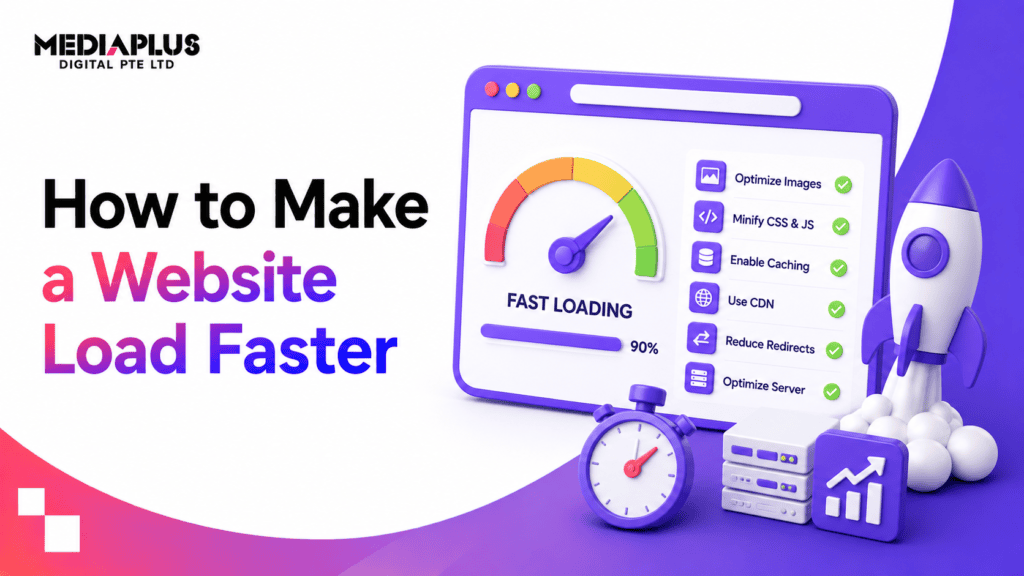
Designers choose the hero video, the four font families and the uncompressed images that make a site slow. Performance is not only a developer problem.
Every second of load time costs visitors, and Google uses page experience signals in ranking. Compress images, limit fonts, and question any element that adds weight without adding clarity. Our explainer on Core Web Vitals covers how this is measured.
Design and search work together
A site can be beautiful and invisible. Search engines need a crawlable structure, sensible headings, descriptive links and fast pages, all of which are design outputs. If you are starting from scratch on the search side, our explainer on what SEO is is the place to begin.
What does a web designer actually do?
Two different people search this question. Business owners want to know what they are paying for. Others are considering it as a career. Both answers are below.
On a project, a web designer:
- Runs discovery to understand the business, the audience and the goal
- Plans the sitemap and page structure
- Produces wireframes, then visual designs
- Builds a design system so components stay consistent
- Specifies responsive behaviour across screen sizes
- Prepares assets and documentation for the developer
- Reviews the build against the design and tests on real devices
As a career, web design sits between visual design and front end development. Most working designers in Australia know design tools such as Figma, understand HTML and CSS well enough to know what is practical, and have working knowledge of usability, accessibility and basic SEO. Many specialise further into UI design, UX research or front end development.
Is it hard to learn? The tools are learnable in weeks. The judgement, knowing why one layout converts and another does not, takes years and comes from shipping real projects and watching what happens. Most people start by rebuilding existing sites as practice, then move to real clients.
The web design process
- Discovery. Business goals, audience, competitors, what the current site does badly
- Sitemap and content plan. What pages exist and what each must achieve
- Wireframes. Structure without styling, so layout is settled before visuals. See what a wireframe is
- Visual design. Colour, type, imagery and components applied to approved structure
- Build and integration
- Testing across devices, browsers and connection speeds
- Launch, following a proper go live checklist
- Iteration. Design is not finished at launch
The order matters. Teams that start with visual design usually end up rewriting content to fit a layout, which is backwards.
What web design costs in Australia
Indicative ranges as at 2026:
|
Approach |
Typical cost |
Suits |
|
DIY website builder |
$300 to $700 a year |
Testing an idea, brand new sole trader |
|
Template site with light customisation |
$2,000 to $5,000 |
Small business with standard needs |
|
Custom design and build |
$8,000 to $25,000 |
Established business, specific requirements |
|
Large or ecommerce build |
$25,000 upwards |
Complex catalogues, integrations, multiple languages |
What moves the number: page count, custom functionality, integrations, whether content is written for you, and whether the design is templated or original. Our breakdowns of website design prices in Australia and website development costs go through the variables.
Builder, freelancer or agency
|
Option |
Strengths |
Limitations |
|
Website builder |
Cheapest and fastest, no technical skill needed |
Limited structure, harder to scale or rank |
|
Freelancer |
Lower cost, direct communication |
Single point of failure, variable skill range |
|
Agency |
Full team across design, build, content and search |
Higher cost, needs a clear brief |
There is no universally right answer. A sole trader validating an idea should use a builder. A business whose website is its main sales channel should not. Our comparison of website builders covers the DIY end, and how to choose a web design agency covers the other.
Common web design mistakes
- Designing the homepage first and treating every other page as an afterthought
- Writing content to fit a layout instead of designing a layout for the content
- Hiding contact details below the fold
- Carousels that rotate before anyone finishes reading
- Forms asking for information you do not need yet
- Stock photography that could belong to any company in the country
- No clear next step on any given page
Our list of website design mistakes covers the fuller set, and essential web design principles covers what to do instead.
How to tell whether your web design is working
Compliments are not the measure. These are:
- Conversion rate. What share of visitors do the thing you want
- Exit pages. Where people leave, and why
- Mobile versus desktop conversion. A large gap usually means a mobile design problem
- Load speed on a real phone, not on office wifi
- Form completion rate. Started versus finished
- Scroll depth on your key pages
If traffic is healthy and enquiries are not, the problem is design rather than marketing. That is the case for conversion rate optimisation.
Frequently asked questions
What is web design in simple terms?
Planning and building how a website is laid out, how people move through it and how it looks, so visitors can find what they need and act.
What is meant by web design?
It refers to the whole set of decisions behind a website’s structure, usability and appearance, not just the visual styling. Layout, navigation, mobile behaviour, speed and accessibility all sit inside it.
Is web design the same as web development?
No. Design decides structure, layout and behaviour. Development writes the code that makes it work. Some people do both.
What does a web designer do?
Plans the site structure, produces wireframes and visual designs, builds a design system, specifies how the site behaves on different screens, and hands documented designs to a developer.
How do I start learning web design?
Learn a design tool such as Figma, learn enough HTML and CSS to understand what is buildable, then rebuild existing websites as practice before taking on real projects. Studying why sites convert matters more than mastering software.
Is web design hard to learn?
The tools take weeks. The judgement takes years. Producing something functional is achievable quickly, producing something that reliably converts is the part that takes experience.
How long does a website take to design?
A template site takes two to four weeks. A custom business site takes six to twelve weeks, most of it spent on content and structure rather than visuals.
Do I need to know how to code to design a website?
Not for a builder based site. For professional work, understanding what is technically practical matters even if you do not write the code yourself.
Does web design affect SEO?
Yes. Site structure, headings, internal links, mobile usability and page speed are all design outputs and all influence search visibility.
How often should a website be redesigned?
Every three to five years for most businesses, or sooner if the business has changed direction, the site is not mobile friendly, or enquiries have fallen.
Getting it right
Web design is a business decision before it is an aesthetic one. Start with what you want visitors to do, structure the site around that, and let the visual work support it.
If you are weighing up a new site or a redesign, our web design and development team can review your current site and tell you what is worth changing. Get in touch for a straight assessment.
Costs above are indicative as at 2026 and vary by scope and provider.