Lead generation is the process of attracting people who might buy from you, capturing their contact details, and warming them up until they are ready to talk to sales. If you have searched for “leads generation” and landed here, the standard term is lead generation, and that is what we will use throughout.
Most businesses do not have a traffic problem. They have a conversion problem. People visit the website, read a page, and leave without a trace. Lead generation is the set of tactics that turns some of those anonymous visitors into named contacts you can follow up with. Done well, it gives your sales team a steady list of people to call instead of a cold start every month.
This guide covers what a lead actually is, the difference between an MQL and an SQL, the channels that produce leads in Australia, how to build a working system, how to qualify and nurture what comes in, and the numbers that tell you whether any of it is paying off.
Why lead generation matters
A business that relies on referrals and word of mouth is at the mercy of other people’s timing. Some months the phone rings, some months it does not. A lead generation system replaces that randomness with something you can forecast and adjust.
There are three practical reasons it earns its place in a marketing budget:
- Predictable pipeline. When you know a channel produces roughly 40 leads a month at a known cost, you can plan hiring, stock and cash flow around it.
- Better use of sales time. Reps spend their hours on people who have already raised a hand, not on strangers who have never heard of you.
- A feedback loop. Every form fill tells you which offers, pages and channels work, so you can move budget toward what converts.
The core concepts
Before you build anything, it helps to share a vocabulary with your sales team. Marketing and sales fall out over leads more than almost anything else, and most of the friction comes from words meaning different things to different people.
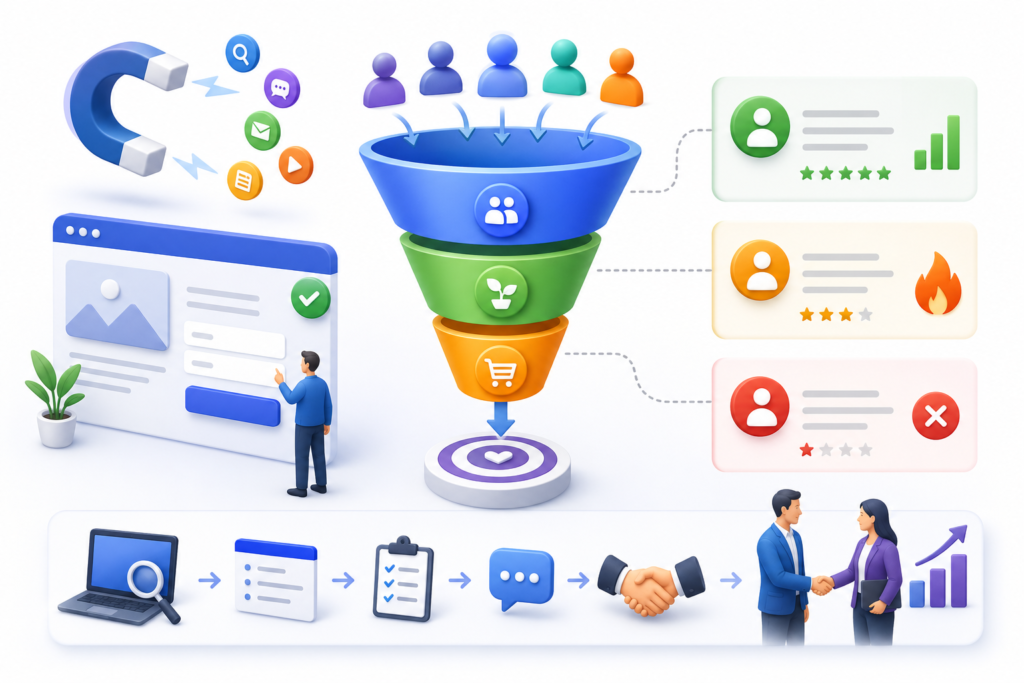
A lead is a person or business that has shown some interest in what you sell, usually by handing over contact details. A downloaded guide, a demo request, a quote form and a newsletter sign-up are all leads, but they are worth very different amounts.
A lead magnet is the thing you give away in exchange for those details: a checklist, a template, a pricing guide, a free audit, a webinar seat. The better the magnet matches a real buying question, the higher the quality of the lead.
MQL vs SQL
Not every lead is ready to buy, and treating them as if they are wastes everyone’s time. The two labels that matter most are the marketing qualified lead and the sales qualified lead.
|
Marketing Qualified Lead (MQL) |
Sales Qualified Lead (SQL) |
|
|
What it is |
Shown interest, fits your rough profile, engaged with content |
Verified as ready and able to buy, handed to sales |
|
Typical action |
Downloaded a guide, attended a webinar, filled a soft form |
Requested a demo, asked for pricing, booked a call |
|
Who owns it |
Marketing, through nurturing |
Sales, through direct contact |
|
Question it answers |
Are they interested? |
Are they a real opportunity? |
|
Next step |
Nurture with email and content |
Discovery call and proposal |
The handover point between the two is where you decide when a lead is warm enough to pass to a rep. Agree that definition in writing with sales, because a vague one guarantees arguments later.
The funnel: TOFU, MOFU, BOFU
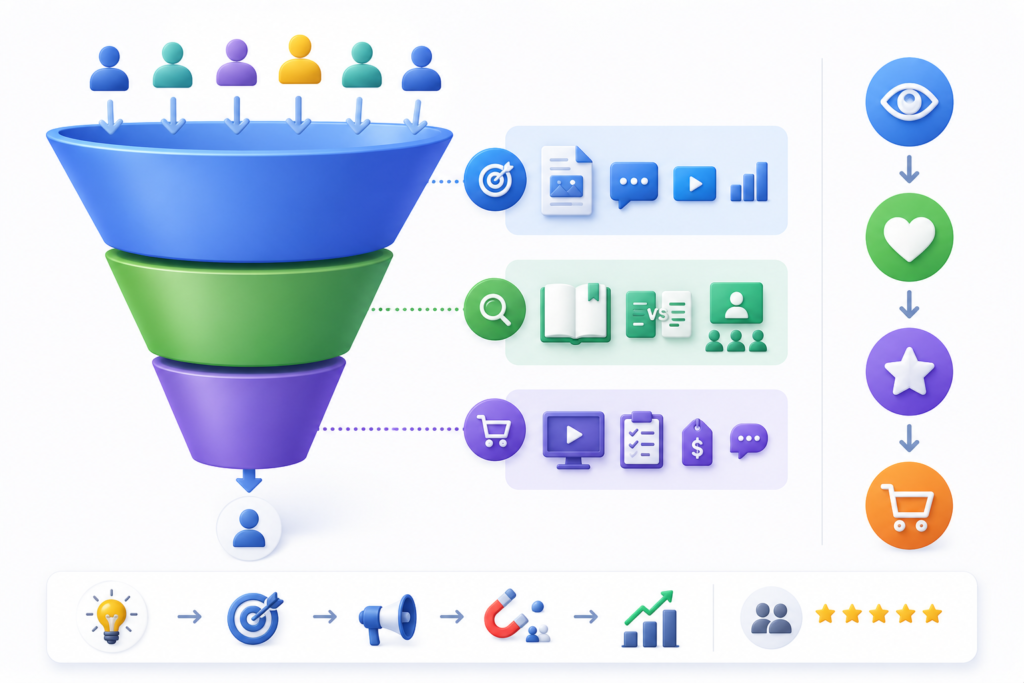
Leads move through stages, and each stage needs a different kind of content. Marketers usually split it into three:
- Top of funnel (TOFU). Awareness. People know they have a problem but not the solution. Blog posts, social content and short guides live here. Our piece on the TOFU, MOFU and BOFU model breaks the stages down further.
- Middle of funnel (MOFU). Consideration. They are comparing options. Case studies, comparison pages, webinars and detailed guides do the work.
- Bottom of funnel (BOFU). Decision. They are close to buying. Demos, free trials, quotes and pricing pages tip them over.
A common framework layered on top of the funnel is the AIDA marketing model, which maps attention, interest, desire and action to the same journey. Pick one and stay consistent so your team reads the funnel the same way.
Inbound vs outbound lead generation
Broadly, leads come from two directions. Inbound pulls people toward you through content and search. Outbound reaches out to people who have not asked to hear from you. Most Australian businesses run a mix, weighted by their sales cycle and budget.
|
Inbound |
Outbound |
|
|
How it works |
People find you via search, content, social |
You contact prospects directly |
|
Examples |
SEO, blog content, lead magnets, webinars |
Cold email, cold calling, LinkedIn outreach, paid ads |
|
Lead intent |
Usually higher, they came looking |
Usually lower, you interrupted them |
|
Cost pattern |
Slow to start, compounds over time |
Fast to start, stops when you stop paying |
|
Best for |
Building a durable pipeline |
Filling a pipeline quickly or testing a market |
|
Main risk |
Takes months to gain traction |
Volume dries up the moment you pause |
Inbound and outbound are not rivals. Outbound gets you leads this quarter while inbound builds the asset that lowers your cost per lead next year.
The main channels and tactics
Here are the channels that actually produce leads for Australian businesses, and what each is good at.
- SEO and content. Ranking for the questions your buyers type into Google brings a steady flow of people already looking for a solution. It is slow to build and cheap to run once it does. Pair blog content with relevant lead magnets so readers have a reason to identify themselves. Our SEO service covers the technical and content side.
- Google Ads and PPC. Search ads put you in front of people at the moment of intent, which is why the leads convert well. You pay per click and can turn it on today. The trade-off is cost: it stops the instant your budget runs out. See our pay per click advertising service for how we structure campaigns.
- Paid social. Facebook, Instagram, LinkedIn and TikTok are strong for reaching people who are not searching yet. Lead form ads let users submit details without leaving the platform, which lifts volume but can lower quality if you do not qualify hard.
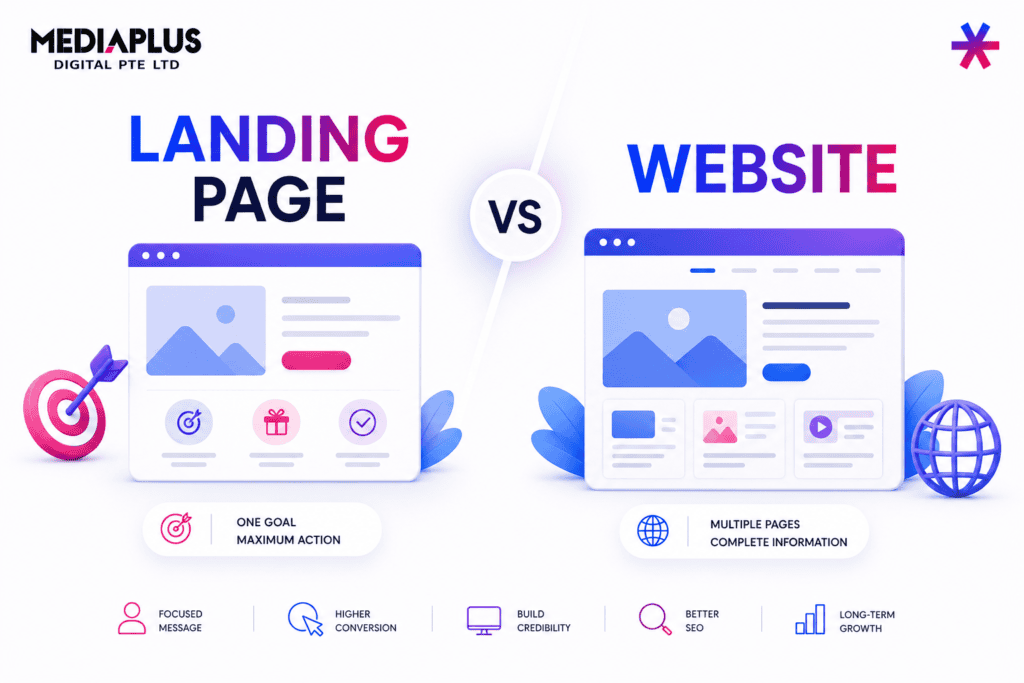
- Landing pages and forms. Every paid click and email should land on a page built for one action, not your homepage. Fewer form fields usually means more submissions, so ask only for what you need to make the first call. A dedicated landing page beats a general page almost every time.
- Lead magnets. Checklists, templates, calculators, pricing guides and free audits give people a reason to swap their email for value. The closer the magnet sits to a buying decision, the warmer the lead.
- Email marketing. Email is where most nurturing happens. A sequence that educates and answers objections keeps you in front of leads who are not ready yet, which is the majority of them.
- Referrals. A structured referral or partner program turns happy customers into a channel. These leads close faster because they arrive with trust already built.
- Webinars and events. A live session on a real problem attracts people willing to spend an hour with you, which is a strong buying signal. The registration list is a batch of qualified leads on its own.
What leads cost by channel in Australia
Cost per lead varies wildly by channel and industry, so treat these as planning ranges, not promises. The figures below are Australian, in AUD.
|
Channel |
Typical CPL (AUD) |
Notes |
|
SEO and content |
Low once established |
High upfront effort, cost per lead falls as rankings compound |
|
Google Search Ads |
~$70 average |
Higher for finance and legal, lower for trades |
|
Facebook/Meta lead ads |
~$44 (2025) |
Rising year on year, quality depends on qualifying questions |
|
LinkedIn (B2B) |
$80 to $250+ |
Expensive per lead but strong for high-value B2B |
|
Email to existing list |
Very low |
Only the list-building cost, no per-lead media spend |
Google Search Ads averaged about AUD $70 per lead and Meta lead ads about AUD $44 in 2025, according to RockingWeb’s Paid Advertising Statistics 2025. Finance and insurance sit far higher, often AUD $95 to $160 or more, per benchmarks compiled by roi.com.au. Your own numbers will land somewhere inside these ranges depending on your margins and how competitive your keywords are.
How to build a lead generation system, step by step
A system beats a scattering of one-off tactics. Here is a sequence that works for most businesses.
- Define who you are targeting. Write down the industry, company size, role and the problem you solve for them. Everything downstream depends on this being specific.
- Set a goal you can measure. For example, 50 qualified leads a month at under AUD $120 each. A number keeps you honest.
- Choose two channels, not seven. Pick one that produces leads fast (usually paid search or paid social) and one that compounds (usually SEO and content). Master those before adding more.
- Create a lead magnet worth the swap. Match it to a real question your buyers ask right before they choose a supplier.
- Build the landing page and form. One offer, one call to action, the fewest fields you can get away with. Add social proof near the form.
- Set up tracking. Connect your forms to a CRM and to your analytics so every lead is attributed to a channel. Without this you are guessing.
- Write the nurture sequence. A handful of emails that educate and move the lead toward a call.
- Review and reallocate monthly. Move budget from the channels with a high cost per lead to the ones that convert, and cut what does not.
Getting the landing page and form right is where most of the easy wins hide, which is why conversion rate optimization sits at the centre of any serious lead gen effort.
How to qualify and nurture leads
Volume is easy. Volume of the right people is the hard part. Qualifying is how you separate the two.
Lead scoring assigns points based on who the person is (job title, company size, location) and what they have done (opened emails, visited the pricing page, requested a demo). When a lead crosses an agreed score, it becomes an SQL and goes to sales. Scoring stops reps from chasing tyre-kickers while genuine buyers wait.
A simple qualifying framework many Australian sales teams use is BANT: budget, authority, need and timing. If a lead has all four, it is ready for a rep. If it is missing timing, it belongs in nurture, not the bin.
Nurturing is what you do with the majority of leads who are interested but not ready. Most people who fill a form will not buy this week. A good nurture sequence:
- Sends useful content spaced out over days or weeks, not a daily barrage.
- Answers the objections that usually kill a deal (price, risk, switching effort).
- Includes a clear next step in every message.
- Hands the lead to sales the moment they show buying behaviour, like opening a pricing email twice.
The point of nurturing is to be the supplier they remember when the timing finally lines up.
The metrics that tell you it is working
Track a small set of numbers rather than a dashboard no one reads.
- Conversion rate. The percentage of visitors who become leads. If a landing page converts at 2 percent, a page at 4 percent doubles your leads on the same traffic.
- Cost per lead (CPL). Total spend on a channel divided by the leads it produced. This is how you compare channels fairly.
- Lead-to-customer rate. The percentage of leads that become paying customers. A channel with a high CPL can still be your best one if its leads close at a much higher rate.
- Cost per acquisition (CPA). What it actually costs to win a customer, once you factor in the leads that did not close. This is the number that decides whether the whole exercise makes money.
CPL on its own is misleading. A channel producing AUD $30 leads that never buy is worse than one producing AUD $120 leads that close half the time. Always follow the lead through to revenue before you judge a channel.
Common mistakes to avoid
- Buying traffic to a weak page. Paying for clicks that land on a page built to convert at 1 percent burns budget. Fix the page before you scale the spend.
- Asking for too much on the form. Every extra field costs you submissions. Ask for the minimum you need to make the first contact.
- No follow-up speed. Leads go cold fast. A lead contacted within minutes is far more likely to convert than one you get to the next day. Have a process, not good intentions.
- Treating every lead the same. Sending a fresh MQL straight to a closing call, or leaving a hot SQL in a drip sequence, both cost you deals.
- Chasing volume over fit. More leads that never buy just gives sales a reason to distrust marketing. Qualify harder.
- Not connecting leads to revenue. If you cannot say which channel produced the customers, not just the leads, you cannot make good budget decisions.
Lead generation is one lever inside a larger plan. It works best when it sits inside a clear digital marketing strategy rather than running as a disconnected campaign.
Frequently asked questions
What is the difference between lead generation and demand generation?
Demand generation creates awareness and interest in a category or product across a broad audience. Lead generation captures the contact details of the people that interest produces. Demand gen fills the top of the funnel; lead gen turns that attention into named contacts you can follow up.
How long does it take to see results from lead generation?
Paid channels like Google Ads and paid social can produce leads within days. SEO and content usually take three to six months to gain traction and longer to reach full strength. A sensible plan runs both so you get leads now and a lower cost per lead later.
What is a good conversion rate for a lead generation landing page?
It depends on the offer and traffic source, but many landing pages convert between 2 and 5 percent, and well-optimised ones go higher. Rather than chase a benchmark, measure your own baseline and improve it through testing.
What is a lead magnet and what makes a good one?
A lead magnet is something valuable you give away in exchange for contact details, such as a checklist, template, calculator or free audit. The best ones solve a specific problem your buyer has right before they choose a supplier, which means the leads arrive closer to a purchase.
How much should I budget for lead generation in Australia?
Start from the cost per lead in your industry and your target lead volume. If leads in your sector cost around AUD $70 and you want 50 a month, budget roughly AUD $3,500 in media plus the cost of content, landing pages and tools. Finance, legal and B2B sit well above that range.
Should I focus on inbound or outbound?
Most businesses need both. Outbound fills the pipeline quickly and is good for testing a new market. Inbound builds a durable, lower-cost source of leads over time. If you have to start with one, choose the one that matches your sales cycle and how fast you need results.
How do I know which channel is worth the money?
Track cost per lead and, more importantly, lead-to-customer rate for each channel. The best channel is the one that produces customers at the lowest cost per acquisition, not the one with the cheapest leads. That means connecting every lead to revenue in your CRM.
Turn traffic into a pipeline
Getting leads is not the hard part. Getting the right leads, at a cost that makes sense, and turning them into customers is where the work is. If you would rather have a system than a scramble, MediaPlus Digital in Melbourne builds and runs lead generation across search, paid media and conversion. Have a look at our performance marketing and conversion rate optimization services, or get in touch for a look at where your funnel is leaking.