If off-page SEO builds your reputation, on-page SEO builds your foundation.
Before search engines can rank your website, they need to clearly understand:
-
What your page is about
-
Which search queries it answers
-
Whether it satisfies user intent
-
Whether the experience is strong enough to deserve visibility
That’s exactly what on-page SEO is designed to do.
What Is On-Page SEO?
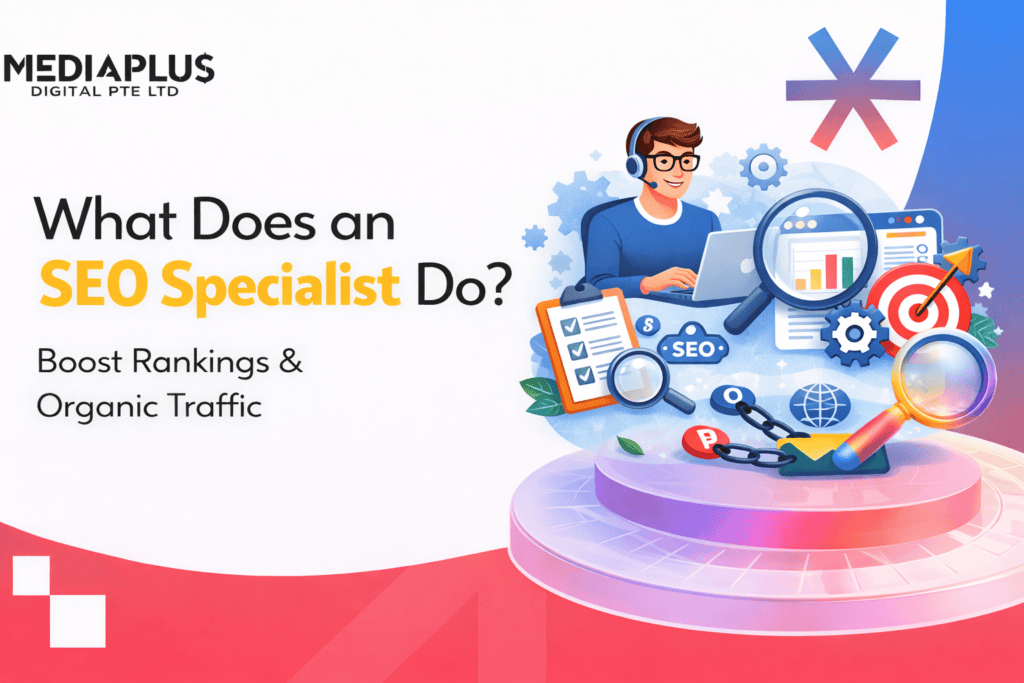
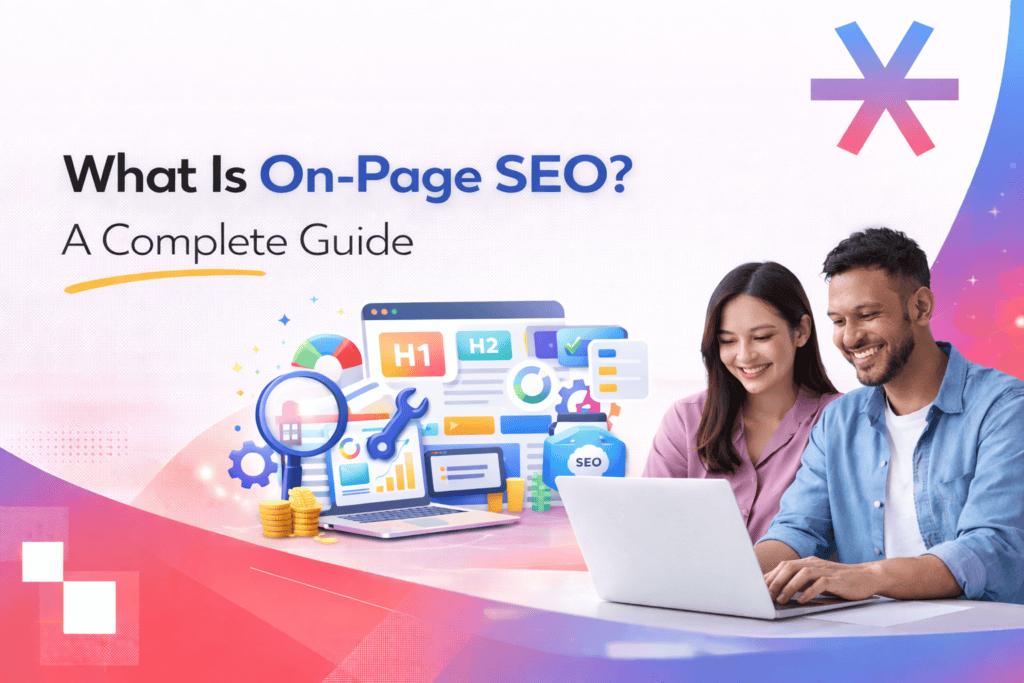
On-page SEO is the practice of optimizing elements on your website to improve rankings in search engines and visibility in AI-powered search results.
It focuses on both:
-
Content quality
-
HTML structure and technical signals
Unlike off-page SEO, which depends on external signals like backlinks, on-page SEO is fully within your control.
Why On-Page SEO Matters in 2026
Search has evolved.
Traditional search engines now compete with AI-powered answer engines and generative search tools. But one thing remains constant: clear, structured, intent-matched content performs best.
On-page SEO helps:
-
Search engines understand your topic
-
AI systems extract clear answers
-
Users find information quickly
-
Increase click-through rate
-
Reduce bounce rate
-
Improve conversions
Even elements that don’t directly impact rankings, like meta descriptions, still influence visibility by improving user engagement.
On-Page SEO vs Off-Page SEO
Here’s the difference:
On-Page SEO
Optimizing elements inside your website:
-
Content quality
-
Keyword placement
-
Headings
-
Title tags
-
Meta descriptions
-
Internal links
-
URL structure
-
Page speed
-
Schema markup
Off-Page SEO
Optimizing signals outside your website:
-
Backlinks
-
Brand mentions
-
Social signals
-
Digital PR
-
Influencer collaborations
Both are essential. On-page builds clarity and relevance. Off-page builds authority and trust.
Core Elements of On-Page SEO
1. High-Quality Content
Everything starts with content.
Modern on-page SEO is no longer about keyword repetition. It is about relevance and usefulness.
Strong content should:
-
Match search intent
-
Answer questions clearly
-
Provide depth
-
Offer unique insights
-
Be easy to read
-
Be well structured
Thin or duplicated content rarely ranks well.
Search engines now evaluate context, synonyms, semantic relationships, and intent. Keyword stuffing is outdated.
2. Strategic Keyword Placement
Keywords still matter, but placement must feel natural.
Key locations include:
-
H1 heading
-
First paragraph
-
Subheadings
-
URL slug
-
Image alt text
Use variations naturally. Focus on clarity, not density.
3. Title Tags
Your title tag is one of the strongest on-page ranking signals.
Best practices:
-
Keep it under 60 characters
-
Include your primary keyword near the beginning
-
Make it compelling
-
Avoid duplication across pages
Example:
Weak: On-Page SEO Guide
Strong: On-Page SEO: 9 Proven Techniques to Rank Higher in 2026
The second version clearly communicates value.
4. Meta Descriptions
Meta descriptions influence click-through rate.
Best practices:
-
Keep around 105–155 characters
-
Include the target keyword
-
Use active voice
-
Add a call to action
Example:
Weak: This article discusses SEO strategies.
Strong: Learn 9 proven on-page SEO strategies to increase rankings and drive qualified traffic. Start optimizing today.
Even if Google rewrites it, a strong meta description improves user experience.
5. Proper Heading Structure
Use a clear hierarchy:
-
H1 for main topic
-
H2 for major sections
-
H3 for subtopics
Headings help:
-
Search engines understand structure
-
AI systems extract answers
-
Users scan content easily
Each section should be self-contained and immediately answer its heading.
6. Optimized URLs
URLs should be:
-
Short
-
Descriptive
-
Keyword-rich
-
Easy to read
Good example:
yourdomain.com/on-page-seo-guide
Avoid:
yourdomain.com/blog?id=23453&page=12
Clean URLs improve clarity and user trust.
7. Internal Linking
Internal links help:
-
Distribute authority
-
Guide users
-
Improve crawlability
-
Increase time on site
Best practices:
-
Use descriptive anchor text
-
Link to relevant pages
-
Avoid over-linking
-
Update old posts with new links
Internal linking builds topical authority.
8. External Linking
Link to authoritative sources when supporting claims.
Benefits:
-
Builds trust
-
Provides context
-
Signals topical relevance
Quality matters more than quantity.
9. Image Optimization
Images impact both SEO and user experience.
Best practices:
-
Compress images
-
Use descriptive file names
-
Add alt text
-
Use modern formats like WebP
-
Implement lazy loading
Alt text improves accessibility and helps search engines understand image context.
Advanced On-Page SEO Techniques
Page Speed Optimization
Fast websites perform better.
Core areas:
-
Improve Largest Contentful Paint (LCP)
-
Minimize render-blocking resources
-
Reduce server response time
-
Enable caching
-
Optimize scripts
Speed directly impacts user experience and indirectly affects rankings.
Schema Markup
Schema markup helps search engines understand context.
Common types:
-
Article
-
Product
-
FAQ
-
Local Business
-
Review
Schema increases eligibility for rich results and AI citations.
AI and LLM Optimization
AI search tools now extract answers directly from structured content.
To optimize for AI visibility:
-
Provide direct answers under headings
-
Use clear, step-based explanations
-
Avoid vague pronouns
-
Include relevant statistics
-
Keep content updated
Clear structure increases your chance of being cited in AI responses.
Measuring On-Page SEO Success
Track performance using:
-
Keyword rankings
-
Organic traffic
-
Click-through rate
-
Time on page
-
Bounce rate
-
AI citations
-
SERP feature appearances
On-page SEO should drive measurable improvements in both visibility and engagement.
Professional Support: MediaPlus Digital Australia
While many on-page tasks can be implemented internally, advanced optimization often requires strategic alignment across technical, content, and AI search environments.
MediaPlus Digital Australia – SEO Service
The SEO service from MediaPlus Digital Australia includes:
-
Comprehensive on-page audits
-
Content gap analysis
-
Technical performance optimization
-
Internal linking strategy
-
Metadata optimization
-
Schema implementation
-
Conversion-focused UX refinement
The focus is not just rankings, but measurable growth.
MediaPlus Digital Australia – AI SEO Service
Modern search requires forward-thinking optimization.
The AI SEO service supports:
-
AI search visibility tracking
-
LLM-focused content structuring
-
Entity optimization
-
Generative search alignment
-
AI citation monitoring
-
Structured content frameworks
This ensures your content performs not only in traditional search engines, but also in AI-powered search environments.
Final Thoughts
On-page SEO is about clarity, relevance, and usability.
It ensures that:
-
Search engines understand your content
-
AI systems extract your answers
-
Users find what they need quickly
In 2026, the most successful websites are not those that repeat keywords the most.
They are the ones that:
-
Match search intent precisely
-
Deliver depth and structure
-
Provide seamless user experience
-
Combine traditional SEO with AI-focused optimization
On-page SEO is your foundation.
Get it right, and everything else becomes easier.