If on-page SEO is about content and off-page SEO is about authority, technical SEO is about infrastructure.
It ensures search engines can:
-
Discover your pages
-
Crawl them efficiently
-
Understand their structure
-
Index them correctly
-
Deliver them quickly to users
Without technical SEO, even the best content may never rank.
What Is Technical SEO?
Technical SEO is the process of optimizing your website’s backend structure and performance so search engines can crawl, index, and rank it effectively.
It focuses on the “behind-the-scenes” elements of your site, including:
-
Site architecture
-
Crawling and indexing
-
Page speed
-
Mobile usability
-
Structured data
-
Security
-
Duplicate content handling
Technical SEO does not change what users read. It changes how search engines access and interpret it.
Why Technical SEO Is Important
Search engines follow a process:
-
Crawl your pages
-
Understand your content
-
Store it in their index
-
Rank it for relevant queries
If any step breaks, your visibility suffers.
Common consequences of poor technical SEO:
-
Important pages not indexed
-
Slow load times reducing rankings
-
Duplicate URLs competing against each other
-
Crawl budget wasted on low-value pages
-
Mobile users bouncing due to poor usability
Technical SEO protects your visibility before rankings even begin.
Core Components of Technical SEO
1. Crawlability
Crawlability determines whether search engines can access your pages.
Key elements include:
Site Architecture
A logical structure helps crawlers move through your site easily.
Best practice:
-
Homepage → Category → Subcategory → Individual Page
-
Keep important pages within three clicks from homepage
-
Avoid orphan pages
Orphan pages have no internal links pointing to them, making them hard to discover.
XML Sitemap
An XML sitemap lists your important URLs.
It helps search engines:
-
Discover new pages
-
Understand priority
-
See last modification dates
Submit your sitemap through Google Search Console.
Robots.txt
The robots.txt file tells search engines what they can and cannot crawl.
Common mistake:
Accidentally blocking important pages.
Always verify your robots.txt is not preventing access to key content.
2. Indexing
Crawled pages must be indexed to appear in search results.
Noindex Tags
The noindex tag prevents a page from appearing in search results.
Use it only for:
-
Thank-you pages
-
Duplicate PPC landing pages
-
Private or low-value content
Do not apply noindex to important pages by mistake.
Canonical Tags
When multiple pages have similar content, canonical tags tell Google which version is primary.
Example situations:
-
Filtered category pages
-
Print versions
-
Duplicate product URLs
Without canonicals, you risk duplicate content dilution.
3. HTTPS Security
HTTPS encrypts user data and is a confirmed ranking factor.
If your site shows “Not Secure” in the browser, it damages trust and SEO performance.
Always:
-
Install SSL certificate
-
Redirect HTTP to HTTPS
-
Ensure no mixed content errors
Security builds both ranking strength and user confidence.
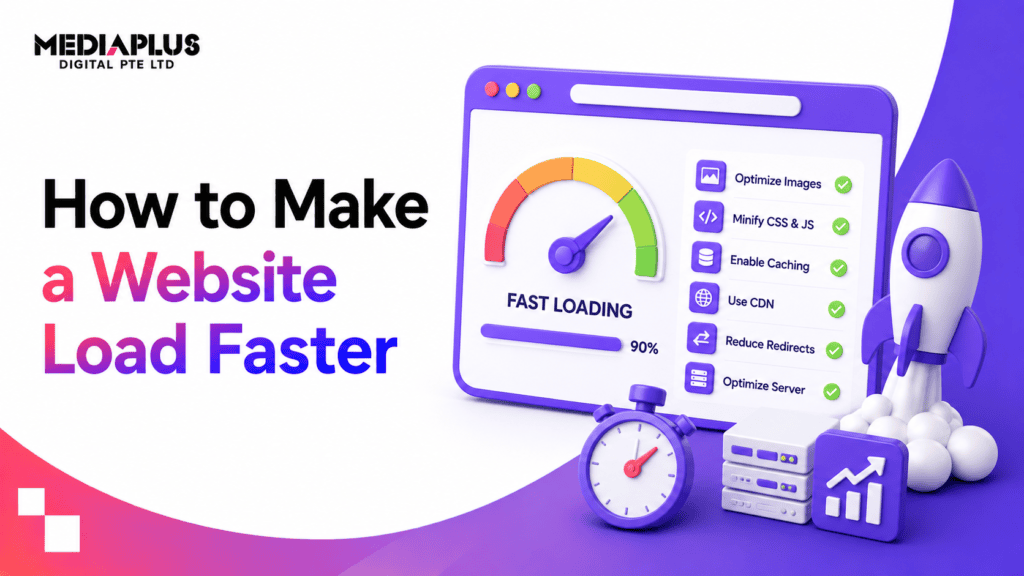
4. Page Speed
Page speed directly affects:
-
Rankings
-
Bounce rate
-
Conversions
-
Core Web Vitals
Important speed metrics include:
-
Largest Contentful Paint (LCP)
-
First Input Delay (FID)
-
Cumulative Layout Shift (CLS)
Ways to improve speed:
-
Compress images
-
Minify CSS and JavaScript
-
Use a Content Delivery Network (CDN)
-
Enable browser caching
-
Reduce server response time
Faster websites rank better and convert more.
5. Mobile Optimization
Google uses mobile-first indexing.
This means Google primarily evaluates your mobile site version for rankings.
Ensure:
-
Responsive design
-
Readable fonts
-
Proper spacing between buttons
-
Optimized viewport settings
-
Fast mobile loading
A poor mobile experience directly impacts rankings.
6. Structured Data (Schema Markup)
Structured data helps search engines understand your content context.
It enables rich results like:
-
Star ratings
-
Product prices
-
FAQ dropdowns
-
Event details
Common schema types:
-
Article
-
Product
-
Local Business
-
Review
-
FAQ
Schema increases click-through rate and AI visibility.
7. Duplicate Content Management
Duplicate content does not cause penalties automatically, but it creates problems:
-
Backlink dilution
-
Confusion for search engines
-
Ranking competition between your own pages
Solutions:
-
Use canonical tags
-
Consolidate similar pages
-
Redirect outdated URLs
Clean duplication improves authority concentration.
8. Redirect Management
Redirects guide users and search engines from old URLs to new ones.
Use:
-
301 redirects for permanent changes
-
Avoid redirect chains
-
Avoid redirect loops
Redirect chains slow crawling and hurt user experience.
9. Core Web Vitals Optimization
Core Web Vitals measure real user experience.
Target benchmarks:
-
LCP under 2.5 seconds
-
FID under 100 milliseconds
-
CLS below 0.1
Optimizing these improves both rankings and user engagement.
10. Hreflang for International Sites
If your website serves multiple languages or regions, hreflang tags tell Google which version to show to which audience.
Example:
-
English for Australia
-
English for UK
-
Spanish for Spain
Without hreflang, Google may show the wrong version to users.
Technical SEO and AI Search
In 2026, technical SEO also supports AI-driven search.
AI tools rely on:
-
Clear structure
-
Proper indexing
-
Schema markup
-
Fast load times
-
Accessible HTML
If your site loads slowly or blocks crawlers, AI systems may not reference your content.
Technical SEO is now foundational for both traditional search engines and AI search environments.
Ongoing Monitoring
Technical SEO is not a one-time setup.
As websites grow, issues appear:
-
Broken links
-
Duplicate pages
-
Redirect errors
-
Slow pages
-
Crawl errors
Regular technical audits are essential to maintain performance.
Professional Support: MediaPlus Digital Australia
Technical SEO often requires deeper expertise across development, content, and infrastructure.
MediaPlus Digital Australia – SEO Service
The SEO service includes:
-
Full technical audits
-
Crawl and index optimization
-
Site architecture restructuring
-
Core Web Vitals improvement
-
Internal linking optimization
-
Schema implementation
-
HTTPS and security checks
The focus is not just visibility, but long-term search performance.
MediaPlus Digital Australia – AI SEO Service
With AI-driven search evolving rapidly, MediaPlus also provides AI SEO service designed to:
-
Optimize for AI-generated search responses
-
Improve structured data alignment
-
Enhance entity recognition
-
Increase AI citation probability
-
Align content structure with LLM parsing patterns
This ensures your website is optimized not only for Google, but also for AI-powered discovery platforms.
Final Thoughts
Technical SEO is the foundation of your search visibility.
Without it:
-
Search engines may not find your pages
-
Rankings may suffer
-
User experience declines
-
Authority gets diluted
With strong technical SEO:
-
Crawling becomes efficient
-
Indexing becomes clean
-
Performance improves
-
Rankings become sustainable
Content may attract attention. Authority may build trust.
But technical SEO ensures your website is structurally strong enough to compete.