Getting traffic is only half the game.
If your website or landing page isn’t converting, you’re leaving money on the table. That’s where Conversion Rate Optimization (CRO) comes in.
CRO is about turning more visitors into customers without increasing your traffic. Even small improvements in conversion rate can lead to significant revenue growth.
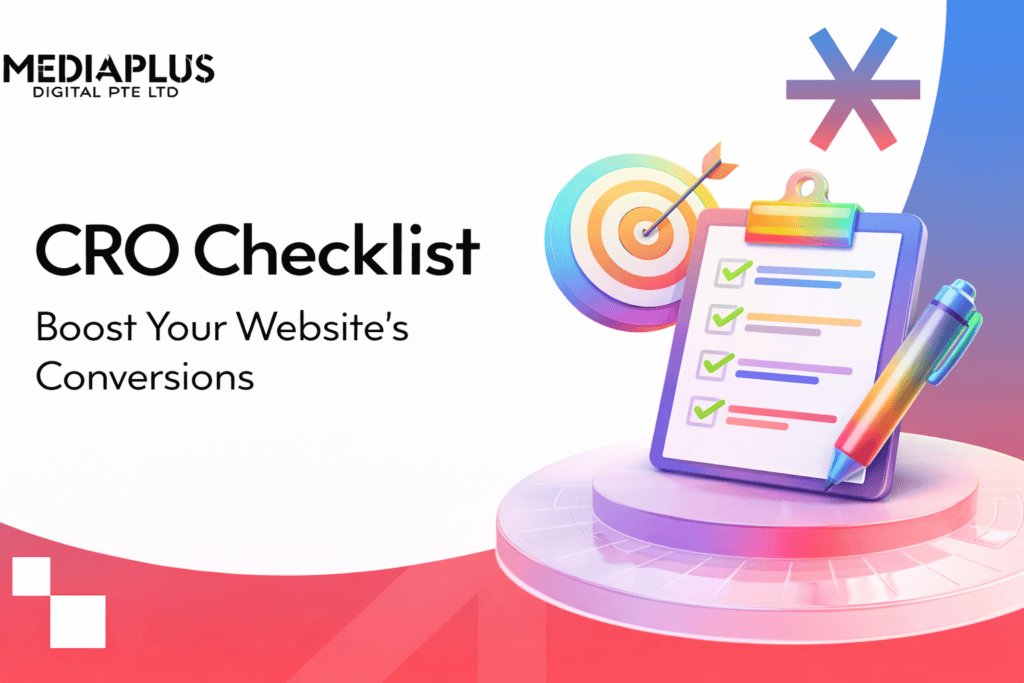
This practical CRO checklist breaks down the most important areas you should optimise, based on real-world testing, user behaviour, and high-performing funnels.
Step 1: Define a Clear Conversion Goal
Before you optimise anything, you need clarity.
Your entire CRO strategy should focus on one primary action:
-
Purchase
-
Form submission
-
Click to checkout
-
Email signup
Trying to optimise everything at once leads to weak results.
Pro tip: Pick one KPI per page. Optimise that first.
Step 2: Collect Real User Data
Great CRO decisions come from real user insights, not assumptions.
Use:
-
Heatmaps (Hotjar, Crazy Egg)
-
Session recordings
-
On-site surveys
-
Post-purchase feedback
-
User testing
Focus on understanding:
-
Why users leave
-
What confuses them
-
What stops them from converting
Step 3: High-Impact CRO Areas to Optimise First
Not all elements are equal.
These areas typically drive the biggest improvements:
-
Headlines
-
CTA buttons
-
Landing page layout
-
Forms
-
Pricing presentation
-
Social proof
-
Images and visuals
Start here before moving to smaller tweaks.
The CRO Checklist
1. Trust & Credibility (Build Confidence)
Users don’t convert if they don’t trust you.
Checklist:
-
Add testimonials with real names and photos
-
Display reviews and ratings
-
Show client logos or case studies
-
Include trust badges (security, payment)
-
Highlight certifications or awards
-
Use real images instead of stock photos
2. Visibility (Make Key Elements Obvious)
If users don’t see it, they won’t click it.
Checklist:
-
Place CTA above the fold
-
Use large, high-contrast buttons
-
Repeat CTA across the page
-
Keep important content visible while scrolling
-
Highlight key benefits with bullet points
3. Clarity (Be Simple, Not Clever)
Confusion kills conversions.
Checklist:
-
Clearly explain what you offer
-
Use simple, direct language
-
Add a “How it works” section
-
Match headline with user intent
-
Avoid jargon or vague messaging
4. Value Proposition (Why Should They Care?)
Users need a strong reason to act.
Checklist:
-
Highlight key benefits, not just features
-
Show outcomes and results
-
Use comparison or price anchoring
-
Add incentives (discounts, bonuses)
-
Make your USP obvious
5. CTA Optimisation (Drive Action)
Your CTA is the most important element on the page.
Checklist:
-
Use action-driven text (e.g. “Get Started”, “Buy Now”)
-
Avoid weak words like “Submit”
-
Make CTA stand out visually
-
Place multiple CTAs across long pages
-
Align CTA with user intent
6. Layout & Design (Reduce Friction)
A messy layout creates friction.
Checklist:
-
Keep design clean and simple
-
Use whitespace effectively
-
Align elements consistently
-
Remove unnecessary distractions
-
Ensure mobile responsiveness
7. Forms & Checkout (Minimise Effort)
The more effort required, the lower the conversion.
Checklist:
-
Reduce form fields to essentials
-
Use autofill where possible
-
Show progress indicators (multi-step forms)
-
Offer guest checkout
-
Simplify payment process
8. Social Proof & Emotion
People follow people.
Checklist:
-
Show user-generated content
-
Add before/after results
-
Include case studies
-
Use emotional triggers (fear, aspiration, urgency)
-
Highlight popularity (e.g. “10,000+ customers”)
9. Urgency & Scarcity
People act faster when they might miss out.
Checklist:
-
Add limited-time offers
-
Show stock availability
-
Use countdown timers
-
Highlight demand (“Selling fast”)
-
Offer limited bonuses
10. Alignment (Match Expectations)
Mismatch = lost conversions.
Checklist:
-
Match ad copy with landing page content
-
Keep messaging consistent
-
Ensure keywords align with content
-
Deliver what was promised in ads
11. Reduce Friction
Remove anything that slows users down.
Checklist:
-
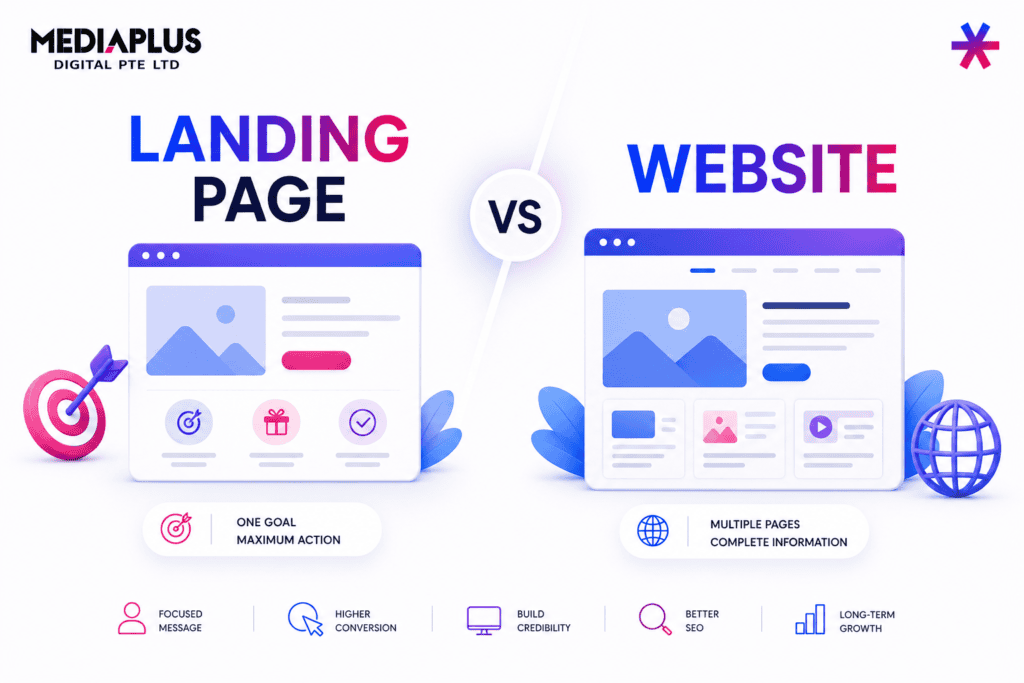
Limit navigation options on landing pages
-
Focus on one main CTA
-
Remove unnecessary links
-
Speed up page load time
-
Fix mobile UX issues
Step 4: Test and Optimise Continuously
CRO is not a one-time task.
Always:
-
Run A/B tests
-
Track performance metrics
-
Iterate based on data
-
Optimise regularly
Even small improvements can compound over time.
How to Turn CRO into Growth
Optimising pages alone is not enough.
Real growth happens when CRO is connected with broader marketing execution.
That usually involves combining CRO service with:
-
Landing page development to improve conversion rate
-
Website maintenance service to ensure speed, uptime, and performance
-
Digital marketing service to align CRO with traffic sources
-
Performance marketing to scale high-converting campaigns
A provider like Mediaplus Digital Australia typically connects these elements into one system. Instead of treating CRO as isolated tweaks, they integrate it with SEO, paid ads, and full-funnel optimisation to drive consistent business growth.
Final Thoughts
CRO is one of the highest ROI activities in digital marketing.
You don’t need more traffic to grow. You need to convert more of the traffic you already have.
Focus on:
-
Clarity
-
Trust
-
Simplicity
-
Continuous testing
Apply this checklist step by step, and you’ll start seeing measurable improvements in conversions, leads, and revenue.