
Building an app in Australia is a significant investment, whether you are a startup testing a new idea or an established business launching a digital product. One of the most common questions business owners ask is simple but critical: How much does it actually cost to develop an app in Australia?
The short answer is that app development costs vary widely. The long answer depends on your goals, technical requirements, and how you approach the build.
This guide breaks down realistic app development costs in Australia, explains what drives those costs, and helps you plan a budget that makes sense for long-term growth rather than just launch day.
Average App Development Cost in Australia
In 2026, most professionally built apps in Australia fall within the following ranges:
-
Simple apps: AUD $30,000 – $80,000
-
Medium-complexity apps: AUD $80,000 – $150,000
-
Complex or enterprise apps: AUD $200,000 – $300,000+
These figures typically cover strategy, design, development, testing, and initial launch. Ongoing maintenance, marketing, and future iterations are usually separate.
Key Factors That Influence App Development Cost
1. Platform Choice: iOS, Android, or Web
The number of platforms you build for has one of the biggest impacts on cost.
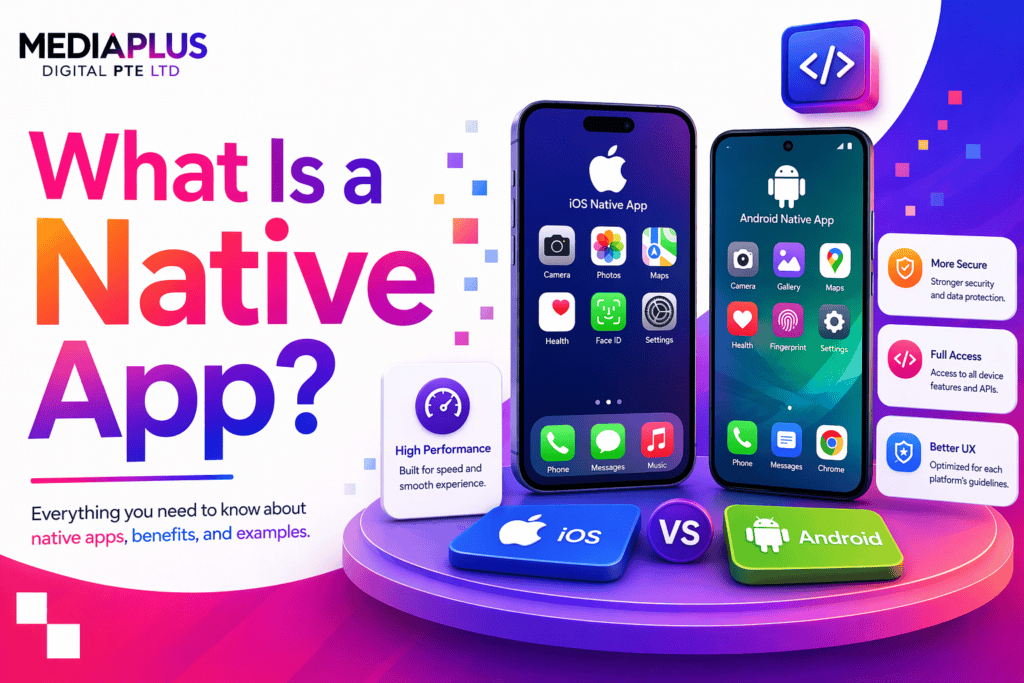
Building for a single platform, such as iOS only, is usually the most cost-effective option for early-stage products. Supporting both iOS and Android increases scope, even when using cross-platform frameworks like React Native or Flutter, because testing, optimisation, and platform-specific behaviour still require extra work.
Many business apps also require a web-based admin panel or dashboard, which can represent a significant portion of the overall cost.
2. App Complexity and Features
Features drive cost more than almost anything else.
Basic functionality such as user login, simple forms, or static content is relatively inexpensive. Costs increase quickly when you introduce more advanced features such as:
-
Real-time chat or messaging
-
Payments and subscriptions
-
Maps and geolocation
-
AI-powered recommendations
-
User-generated content or social feeds
Each feature requires design, business logic, backend support, and testing. Even small changes in feature scope can have a meaningful impact on the final budget.
3. Number of Screens and User Flows
Every screen in an app needs to be designed, built, and tested.
An app with five well-defined screens will be significantly cheaper than one with twenty screens and multiple branching user journeys. Reducing unnecessary screens and simplifying flows is one of the most effective ways to control costs without sacrificing value.
4. Design Level and User Experience
Design is not just about how the app looks. It affects usability, trust, and conversion.
Using standard UI components and system patterns keeps costs lower. Custom animations, bespoke interfaces, and unique interaction design increase time and cost but can be worthwhile for consumer-facing apps competing in crowded markets.
In Australia, high-quality UX and accessibility standards are often expected, particularly for government, healthcare, and finance-related apps.
5. Backend Development and Infrastructure
Apps that store user data, personalise experiences, or sync across devices require backend systems.
Backend development includes databases, APIs, authentication, hosting, and security. More complex logic and scalability requirements increase cost but are often essential for apps intended to grow beyond early users.
6. Integrations With Third-Party Systems
Integrating with external systems can significantly affect pricing.
Well-documented APIs such as Google Maps or Stripe are usually straightforward. Custom or proprietary systems, such as internal enterprise software, often require additional engineering effort and coordination, which increases cost and timeline.
Typical Cost Breakdown by App Type
Simple Apps
These apps focus on a single function or use-case and often serve as MVPs.
-
Basic UI and navigation
-
Limited features
-
Minimal backend logic
Typical cost: $30,000 – $80,000
Medium-Complexity Apps
These apps support multiple user actions and workflows.
-
User accounts and profiles
-
API integrations
-
Admin dashboards
-
Payment or booking systems
Typical cost: $80,000 – $150,000
Complex or Enterprise Apps
These apps are designed for scale, performance, and security.
-
Advanced business logic
-
AI, real-time data, or AR features
-
High user volumes
-
Strong security and compliance requirements
Typical cost: $200,000+
Ongoing Costs to Budget For
Many teams underestimate what happens after launch.
You should plan for ongoing expenses such as:
-
Maintenance and bug fixes, often around 10 percent of initial build cost per year
-
Hosting and server costs, which scale with usage
-
App store developer accounts
-
Marketing, user acquisition, and optimisation
An app is never “done.” Successful apps evolve through continuous iteration based on real user feedback.
How to Reduce App Development Costs Without Sacrificing Quality
There are smart ways to manage budget without cutting corners.
Clear scoping at the start reduces expensive changes later. Building an MVP instead of a fully-featured product helps validate demand before heavy investment. Cross-platform development can reduce duplicated effort when timelines and use-cases allow.
Most importantly, prioritising business outcomes over features keeps projects focused and efficient.
Final Thoughts
The cost of developing an app in Australia varies because apps are built to serve very different business goals.
An app should never be treated as a one-off expense. It is a long-term investment in customer experience, operational efficiency, and scalable growth. The smartest decision is not choosing the cheapest build, but choosing an approach that supports your business strategy over the next three to five years.
This is where experienced digital partners like MediaPlus Digital Australia add value beyond development alone.
Through its Mobile App Development in Australia service, MediaPlus helps businesses plan, build, and launch apps that are designed to perform in real-world market conditions, not just function technically.
Building the app is only the beginning. Making it visible, usable, and profitable is where strategy matters most.