Your checkout page is where all your marketing efforts either pay off or fall apart. You can drive traffic, optimise landing pages, and build a strong product, but if your payment process is slow or confusing, customers will leave right before completing the purchase.
That’s where a payment gateway comes in. It plays a critical role in making online transactions smooth, secure, and fast.
What Is a Payment Gateway?
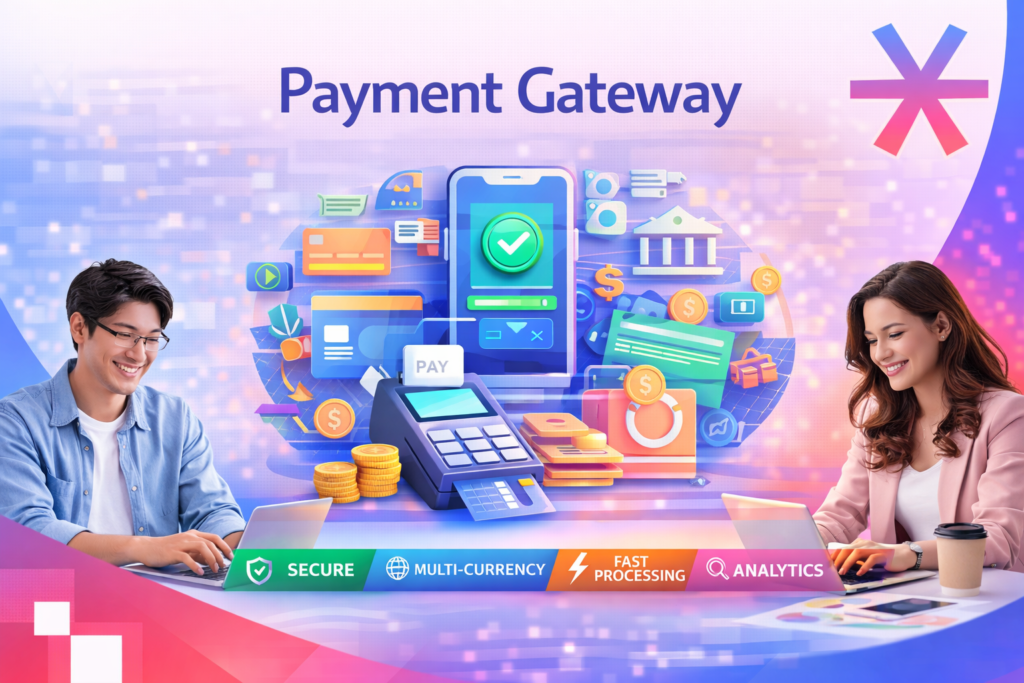
A payment gateway is the technology that securely processes online payments between your website and your customer’s bank.
When someone clicks “Pay” on your site, the gateway:
-
Captures their payment details
-
Encrypts sensitive data
-
Sends it through the payment network
-
Returns an approval or decline in seconds
Think of it as a secure bridge connecting your checkout page to the banking system.
Why Payment Gateways Matter for Your Business
A good payment gateway directly impacts your revenue, not just your operations.
Here’s what it influences:
-
Conversion rate: A smooth checkout reduces cart abandonment
-
Transaction success rate: Better routing improves approvals
-
Customer trust: Secure systems increase confidence
-
Global sales: Multi-currency support enables international growth
Even a small improvement in payment success rate can lead to significant revenue gains over time.
How Payment Gateways Work (Step-by-Step)
The process happens in just a few seconds, but there’s a lot going on behind the scenes:
-
Customer enters payment details on your website
-
Gateway encrypts the data for security
-
Information is sent to the payment processor
-
The bank approves or declines the transaction
-
Funds are transferred to your merchant account
-
Confirmation is sent back to the customer
All of this typically happens in under 3 seconds.
Top 7 Payment Gateway Providers in Australia (2026)
Choosing the right provider depends on your business model, customer location, and transaction volume. Here are some of the most widely used options in Australia:
1. Airwallex
Airwallex is a modern fintech platform designed for global businesses.
It stands out for:
-
Supporting 160+ payment methods
-
Accepting 130+ currencies
-
Offering “like-for-like” settlement (no forced FX conversion)
This is ideal if you sell internationally and want to reduce foreign exchange costs.
2. Stripe
Stripe is one of the most developer-friendly platforms available.
Key strengths:
-
Powerful APIs for custom integrations
-
100+ payment methods
-
Strong fraud detection tools
It’s a great choice for businesses that need flexibility and scalability.
3. PayPal
PayPal is widely trusted by consumers, which can help increase conversion rates.
Benefits include:
-
One-click checkout experience
-
Strong brand recognition
-
Support for multiple payment methods
However, fees tend to be higher than other providers.
4. Square
Square is ideal for businesses that operate both online and offline.
It offers:
-
POS hardware for in-store payments
-
Unified dashboard for all transactions
-
Simple flat-rate pricing
5. Adyen
Adyen is built for enterprise-level businesses.
Key features:
-
200+ payment methods
-
Advanced payment routing
-
Global processing capabilities
It’s powerful but may be complex for smaller businesses.
6. GoCardless
GoCardless focuses on Direct Debit payments.
Best for:
-
Subscription businesses
-
Recurring billing models
-
Lower transaction fees compared to cards
7. Shopify (Shopify Payments)
If you run a Shopify store, this is the most seamless option.
Advantages:
-
Fully integrated checkout
-
No extra transaction fees (if used natively)
-
Sync with orders and inventory
Key Features to Look For in a Payment Gateway
Not all gateways are created equal. When choosing one, focus on features that directly impact performance and revenue.
1. Checkout Experience
A smooth checkout flow is critical.
Look for:
-
Embedded checkout (no redirects)
-
Mobile-friendly design
-
Fast loading speed
The fewer steps required, the higher your conversion rate.
2. Multi-Currency Support
If you sell internationally, this is essential.
A strong gateway should:
-
Allow customers to pay in local currencies
-
Minimise FX conversion fees
-
Support global payment methods
3. Payment Methods Coverage
Different customers prefer different payment options.
Make sure your gateway supports:
-
Credit and debit cards
-
Digital wallets (Apple Pay, Google Pay)
-
Buy Now Pay Later (BNPL)
-
Local payment methods
4. Security and Compliance
Security is non-negotiable.
Look for:
-
PCI DSS compliance
-
Tokenisation
-
3D Secure authentication
-
Real-time fraud detection
5. Integration and Ease of Use
Your gateway should connect easily with your existing stack.
This includes:
-
eCommerce platforms (Shopify, WooCommerce)
-
CRM systems
-
Accounting tools
No-code or low-code integrations can save time and cost.
6. Settlement Speed
Cash flow matters.
Some gateways:
-
Settle funds instantly or same day
-
Others take 2–3 business days
Faster settlement gives you more flexibility to reinvest.
Payment Gateway vs Payment Processor
These terms are often confused, but they serve different roles:
-
Payment Gateway: The front-end system customers interact with during checkout
-
Payment Processor: The backend system that communicates with banks and moves money
Many modern platforms like Airwallex and Stripe combine both into a single solution, simplifying setup and reducing costs.
Common Pricing Models Explained
Understanding pricing helps you avoid hidden costs.
Flat-Rate Pricing
-
Fixed fee per transaction (e.g. 1.7% + $0.30)
-
Simple and predictable
-
Suitable for small businesses
Interchange++ Pricing
-
Based on actual bank and network fees + markup
-
More transparent but complex
-
Better for high-volume businesses
Subscription Pricing
-
Monthly fee + lower transaction rates
-
Ideal if you process large volumes consistently
Why Payment Gateway Setup Needs the Right Support
Choosing the right payment gateway is only one part of the equation. What actually impacts your conversion rate is how well that gateway is implemented into your website.
A poorly integrated checkout can slow down your site, create friction, or break the user experience. Even the best providers like Stripe or PayPal won’t perform well if the technical setup is weak.
This is where working with a full-service partner like Mediaplus Digital Australia becomes valuable.
Instead of treating payments as a standalone feature, they connect it with the entire website and marketing system.
For example, they typically combine:
-
Web Design & Development to ensure your checkout flow is fast, mobile-friendly, and conversion-focused
-
E-commerce Web Development to properly integrate payment gateways like Stripe, PayPal, or Shopify Payments into your store
-
Landing Page Development to reduce friction and guide users smoothly from ad click to completed purchase
-
Website Maintenance Services to keep payment systems secure, updated, and running without errors
-
Performance Marketing to bring qualified traffic that is more likely to convert through your checkout
This kind of integration matters more than most businesses realise. Payment gateways don’t fail because of the provider. They fail because of poor implementation.
A slow-loading checkout, broken payment button, or lack of trust signals can easily cost you real revenue.
Agencies like MediaPlus take a system-level approach, where:
-
Traffic acquisition
-
Website experience
-
Payment processing
all work together as one growth engine.
Final Thoughts
A payment gateway is not just a technical tool. It is a core part of your revenue system.
The right gateway can:
-
Reduce cart abandonment
-
Improve transaction success rates
-
Support global expansion
-
Protect your customers’ data
The wrong one can quietly cost you sales every single day.
As eCommerce continues to grow in Australia, businesses that optimise their checkout experience will have a clear advantage. Choosing a fast, secure, and flexible payment gateway is one of the smartest investments you can make for long-term growth.