Choosing the right ecommerce platform is one of the most important decisions for any online business. The platform you select determines how easily you can manage products, process payments, scale operations, and integrate marketing tools.
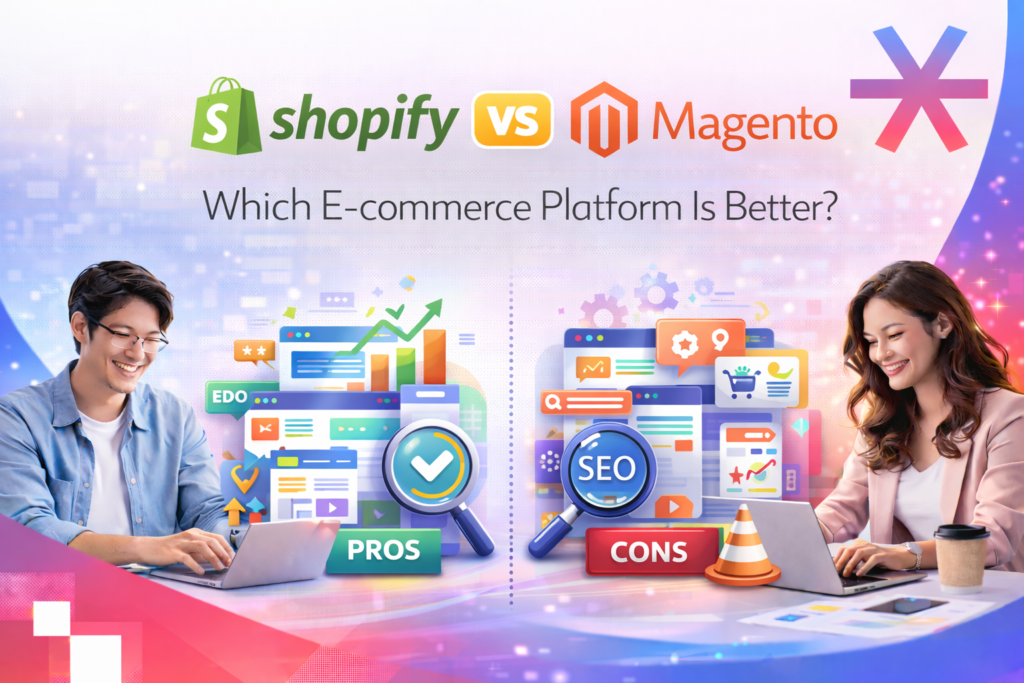
Two of the most widely discussed ecommerce platforms are Shopify and Magento. Both power thousands of online stores around the world, but they serve different types of businesses and require different levels of technical expertise.
Shopify is known for its simplicity and all-in-one ecosystem, making it attractive for businesses that want to launch and manage online stores quickly. Magento, now known as Adobe Commerce, offers deep customization and enterprise-level capabilities but requires more technical resources to operate effectively.
Understanding the differences between these platforms helps businesses choose the system that best supports their long-term growth.
This guide explores how Shopify and Magento compare across usability, customization, scalability, cost, and marketing capabilities.
Shopify vs Magento: Key Differences Explained
Ease of Use
One of the biggest differences between Shopify and Magento is how easy each platform is to use.
Shopify is designed to simplify ecommerce management. It provides a fully hosted environment where businesses can build stores, manage products, and process orders without needing extensive technical knowledge. Most features are built directly into the platform, including payment processing, security updates, and hosting infrastructure.
Magento, on the other hand, is an open-source ecommerce framework. While this gives developers extensive control over functionality, it also means the platform requires technical expertise to set up and maintain. Businesses typically need experienced developers to configure hosting, manage updates, and customise store features.
For startups or small businesses that want to launch quickly, Shopify is usually easier to manage. Magento is better suited for companies with dedicated development teams.
Customization and Flexibility
Magento’s greatest strength is its flexibility.
Because it is open source, developers can customise almost every aspect of the platform. Large ecommerce brands often choose Magento when they require complex functionality, unique checkout processes, or highly specialised integrations.
Shopify also allows customization, but within a more structured ecosystem. Store owners can modify design elements using themes and extend functionality through the Shopify App Store. However, deep structural changes to the platform are more limited compared to Magento.
For businesses that prioritise full development control and unique features, Magento offers greater flexibility. Shopify prioritises simplicity and efficiency over unlimited customization.
Scalability
Both platforms are capable of supporting growing ecommerce businesses, but they scale in different ways.
Shopify handles infrastructure automatically. As traffic increases, the platform manages performance, security, and hosting capacity. This makes scaling easier for businesses that prefer a managed solution.
Magento provides strong scalability as well, but it requires careful infrastructure management. High-traffic Magento stores often rely on advanced hosting environments, caching systems, and development teams to maintain performance.
Large enterprises that require complex catalog management, multiple storefronts, or global ecommerce operations often use Magento because of its advanced architecture.
However, Shopify has increasingly moved into the enterprise market through Shopify Plus, which provides higher scalability while maintaining ease of use.
Cost Structure
Cost is another important factor when comparing Shopify and Magento.
Shopify operates on a subscription model. Businesses pay a monthly fee that includes hosting, security, and core ecommerce functionality. Additional costs may include premium apps, custom themes, and transaction fees depending on the payment gateway used.
Magento’s open-source version is free to download, but operating the platform involves significant costs. Businesses must pay for hosting infrastructure, development resources, security management, and ongoing maintenance.
For many companies, Magento becomes more expensive than Shopify over time because of these technical requirements.
Enterprise versions of Magento, such as Adobe Commerce, involve even higher licensing and infrastructure costs but provide powerful enterprise capabilities.
SEO and Marketing Capabilities
Both platforms offer strong marketing capabilities, but they approach them differently.
Shopify includes built-in marketing tools such as discount systems, abandoned cart recovery, and integration with advertising platforms. Many marketing features can also be extended through apps.
Magento offers highly customizable marketing features through modules and integrations. This allows developers to implement advanced SEO strategies, custom checkout funnels, and personalised shopping experiences.
However, because Magento relies heavily on developer configuration, businesses must invest more time and resources to implement these capabilities.
Security and Maintenance
Shopify handles security and system maintenance automatically. Updates, patches, and infrastructure management are handled by the platform, reducing technical responsibility for store owners.
Magento requires businesses to manage their own security updates, hosting configuration, and technical maintenance. This provides flexibility but increases operational complexity.
For companies without internal development teams, maintaining Magento can become challenging.
Final Thoughts
Shopify and Magento are both powerful ecommerce platforms, but they serve different types of businesses.
Shopify is ideal for companies that want a reliable, easy-to-manage ecommerce system with built-in infrastructure and fast deployment. It allows businesses to focus more on sales, marketing, and customer experience rather than technical management.
Magento offers deeper customization and enterprise-level capabilities. However, it requires greater technical expertise and infrastructure investment to operate effectively.
For many growing businesses, the best platform depends on resources, development requirements, and long-term digital strategy.
Companies launching new ecommerce platforms or scaling online operations often benefit from expert guidance during the planning and development process.
MediaPlus Digital Australia supports ecommerce brands with web design and development, scalable Shopify website maintenance, and conversion-focused landing page development. Combined with services such as Google Ads campaigns, performance marketing, and broader digital marketing strategies, businesses can build ecommerce platforms designed not only to operate smoothly but to drive sustainable online growth.