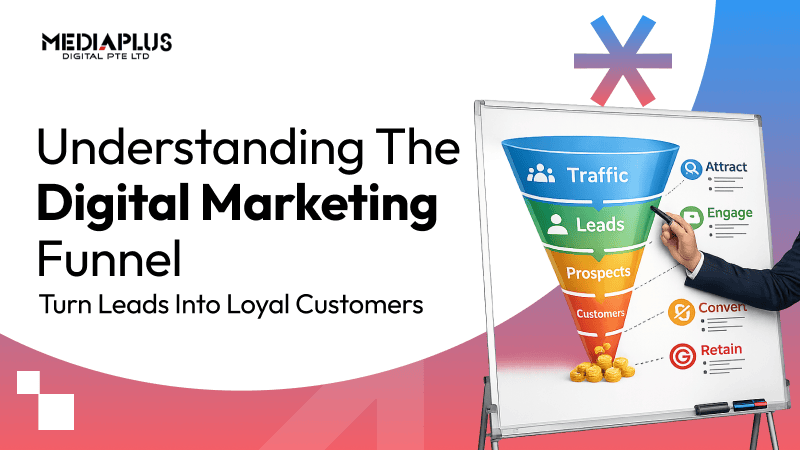
If your marketing feels disconnected, inconsistent, or underperforming, the problem is often not the channel. It is the funnel.
TOF, MOF, and BOF represent the three key stages of the buyer’s journey. Understanding how these stages work, and aligning your messaging to each one, is essential for building a marketing system that attracts, nurtures, and converts customers efficiently.
This guide breaks down what TOF, MOF, and BOF really mean, how they differ, and how businesses should use each stage strategically.
What Are TOF, MOF, and BOF?
TOF, MOF, and BOF stand for:
-
Top of the Funnel
-
Middle of the Funnel
-
Bottom of the Funnel
Together, they describe the journey a buyer takes from first awareness to final decision. At each stage, buyers have different questions, different intent levels, and different expectations.
Marketing works best when it meets people where they are, not where you want them to be.
TOF: Top of the Funnel (Awareness Stage)
The Top of the Funnel is where the buyer first becomes aware of a problem, need, or opportunity. At this stage, they are not looking to buy. They are looking to understand.
TOF is about education and value. The goal is to attract attention and position your brand as helpful and relevant, not sales-driven.
Key Characteristics of TOF
-
Broad audience targeting
-
Low buying intent
-
High focus on learning and discovery
-
Minimal product or pricing discussion
Common TOF Content and Channels
-
Blog articles and guides
-
SEO content targeting informational keywords
-
Social media awareness campaigns
-
Display ads and YouTube ads
-
Educational videos and infographics
At TOF, success is measured by reach, engagement, and traffic quality, not conversions.
MOF: Middle of the Funnel (Consideration Stage)
The Middle of the Funnel is where buyers start comparing options. They understand their problem and are now evaluating possible solutions.
This stage is about trust, credibility, and differentiation. Buyers want proof that your solution works and that your brand understands their challenges.
Key Characteristics of MOF
-
More targeted audience
-
Medium buying intent
-
Active comparison of solutions
-
Higher engagement with brand content
Common MOF Content and Channels
-
Case studies and success stories
-
White papers and downloadable guides
-
Webinars and explainer videos
-
Email nurturing campaigns
-
Retargeting ads
MOF content should answer questions clearly and reduce uncertainty. This is where brands earn trust.
BOF: Bottom of the Funnel (Decision Stage)
The Bottom of the Funnel is where buyers are ready to take action. They have shortlisted options and want reassurance that choosing you is the right decision.
BOF is about clarity and simplicity. Friction kills conversions at this stage.
Key Characteristics of BOF
-
Narrow, high-intent audience
-
Strong buying signals
-
Focus on pricing, demos, and next steps
-
Conversion-focused messaging
Common BOF Content and Channels
-
Product demos and free trials
-
Pricing pages and comparison pages
-
High-intent search ads
-
Remarketing campaigns
-
Sales landing pages
At BOF, the brand that removes friction and builds confidence wins.
How TOF, MOF, and BOF Work Together
These stages are not isolated. They support each other.
- TOF builds awareness and fills the pipeline.
- MOF nurtures interest and builds trust.
- BOF converts demand into revenue.
Ignoring any stage creates imbalance. Too much BOF without TOF limits scale. Too much TOF without MOF and BOF wastes budget.
TOF, MOF, BOF in Paid Advertising and SEO
Different funnel stages require different tactics.
SEO Across the Funnel
-
TOF SEO targets broad, informational keywords
-
MOF SEO targets long-tail, problem-aware searches
-
BOF SEO targets high-intent, conversion-focused queries
Paid Media Across the Funnel
-
TOF uses reach-based and awareness campaigns
-
MOF focuses on retargeting and engagement
-
BOF prioritises conversion-optimised ads and landing pages
Aligning keywords, creatives, and landing pages to funnel intent dramatically improves performance.
Common Funnel Mistakes to Avoid
Many campaigns fail because funnel intent is ignored.
Common mistakes include:
-
Using BOF messaging for TOF audiences
-
Pushing pricing too early
-
Sending traffic to generic landing pages
-
Measuring success with the wrong KPIs
-
Treating the funnel as linear instead of cyclical
A funnel should guide, not pressure.
Final Thoughts
TOF, MOF, and BOF are not just marketing jargon. They are a practical framework for building predictable, scalable growth.
When each stage is clearly defined and supported with the right content, channels, and messaging, marketing becomes more efficient and conversions become more consistent. Awareness campaigns stop wasting budget, consideration content builds real trust, and conversion efforts focus on users who are actually ready to act.
This is why performance-led agencies like MediaPlus Digital Australia structure strategies around the full funnel. By aligning SEO services to capture demand at every intent level, digital marketing services to nurture users through the journey, and social media ads services to amplify reach and retarget high-intent audiences, MediaPlus helps businesses attract the right people, build credibility, and convert demand into measurable revenue.
Marketing works best when the journey makes sense. Understanding the funnel is where that starts.