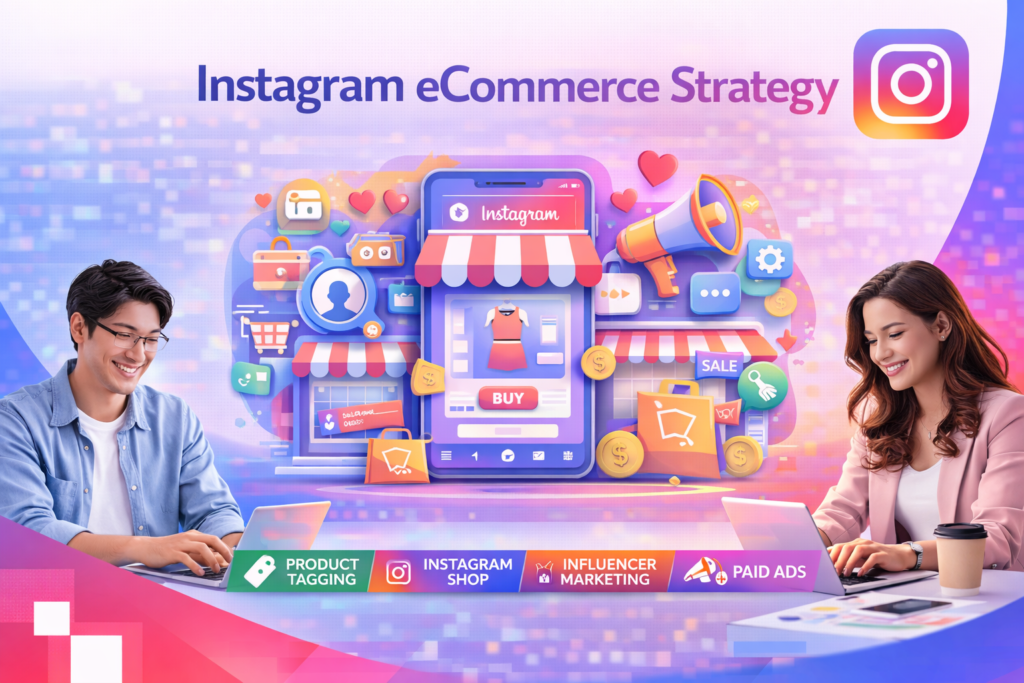
Instagram is no longer just a social media platform. It has evolved into a full-scale ecommerce channel where brands can attract, engage, and convert customers without ever leaving the app.
With billions of active users and a growing number of shoppers using Instagram every week, businesses that ignore this channel are leaving revenue on the table.
In this guide, you’ll learn how Instagram ecommerce works, why it matters, and how to build a strategy that actually drives sales, not just likes.
What Is Instagram Ecommerce?
Instagram ecommerce is the process of using Instagram to promote and sell products directly through the platform.
This typically involves:
-
Instagram Shops (your in-app storefront)
-
Product tagging in posts and Stories
-
Shoppable ads
-
Influencer collaborations
-
Direct messaging for sales
Instead of sending users to a separate website, Instagram reduces friction by allowing users to discover and purchase products within the app.
Why Instagram Is Powerful for Ecommerce
Instagram sits at the intersection of content, community, and commerce.
Key advantages include:
-
High purchase intent: Users actively discover and explore products
-
Visual-first experience: Ideal for showcasing products
-
Strong engagement rates compared to other platforms
-
Seamless shopping features that reduce drop-off
For ecommerce brands, this means shorter customer journeys and higher conversion potential.
Core Benefits of Instagram Ecommerce
1. Frictionless Buying Experience
Instagram Shopping allows users to:
-
Tap on products in posts
-
View pricing and details instantly
-
Purchase with minimal steps
This reduces the number of clicks between discovery and conversion, which is critical for improving sales.
2. Built-In Audience Reach
Instagram helps brands reach both existing followers and new audiences through:
-
Explore page visibility
-
Hashtags
-
Reels and short-form content
-
Paid ads
Many users browse Instagram specifically to discover new brands, making it a strong acquisition channel.
3. High Engagement and Interaction
Instagram enables direct communication with customers through:
-
Comments
-
Direct messages
-
Story replies
-
Polls and Q&A features
This creates a more personal connection compared to traditional ecommerce platforms.
4. User-Generated Content (UGC)
Customers often share their experiences with products, creating organic promotion.
UGC helps:
-
Build trust
-
Increase credibility
-
Influence purchasing decisions
In many cases, content created by customers performs better than branded content.
5. Strong Brand Awareness
Instagram is one of the most effective platforms for building brand identity through:
-
Consistent visual storytelling
-
Influencer collaborations
-
Community engagement
This makes it easier to stay top-of-mind with potential customers.
Key Instagram Ecommerce Strategies
To succeed, brands need more than just posting regularly. You need a structured approach.
1. Use Product Tagging Everywhere
Product tagging turns content into a direct sales channel.
Best practices:
-
Tag products in feed posts
-
Use shoppable stickers in Stories
-
Include tags in Reels
This allows users to move from inspiration to purchase instantly.
2. Work with Influencers Strategically
Influencer marketing remains one of the most effective ways to scale reach.
Focus on:
-
Micro and nano influencers (higher trust and engagement)
-
Niche relevance instead of follower count
-
Authentic content over scripted ads
Well-matched influencers can drive both traffic and conversions.
3. Leverage Giveaways and Campaigns
Giveaways are a powerful way to boost visibility and engagement.
Typical mechanics include:
-
Follow the account
-
Like and share the post
-
Tag friends
This increases reach organically and attracts new potential customers quickly.
4. Encourage User-Generated Content
Make your customers part of your marketing strategy.
How to do it:
-
Create branded hashtags
-
Feature customer posts
-
Offer incentives for sharing
UGC acts as social proof and reduces hesitation during the buying process.
5. Create High-Converting Content
Not all content drives sales. Focus on formats that convert:
-
Product demonstrations
-
Before-and-after content
-
Tutorials and how-to videos
-
Customer reviews and testimonials
The goal is to show value, not just aesthetics.
Instagram Ecommerce Metrics That Matter
Tracking the right metrics is what separates growth from guesswork.
1. Engagement Rate
Measures how users interact with your content.
Includes:
-
Likes
-
Comments
-
Shares
-
Saves
A high engagement rate usually indicates strong content-market fit.
2. Click-Through Rate (CTR)
Shows how many users click on product tags or links.
Important for understanding:
-
Content effectiveness
-
Product interest
Low CTR may indicate weak calls-to-action or unclear messaging.
3. Conversion Rate (CVR)
Tracks how many users complete a purchase after interacting with your content.
This is one of the most important ecommerce metrics because it directly impacts revenue.
4. Cost Per Click (CPC)
Relevant for paid campaigns.
Helps evaluate:
-
Ad efficiency
-
Targeting quality
Lower CPC with strong conversions indicates effective ad strategy.
5. Return on Ad Spend (ROAS)
Measures revenue generated from advertising.
Formula:
Revenue ÷ Ad Spend
A strong ROAS means your campaigns are profitable and scalable.
6. Customer Acquisition Cost (CAC)
Shows how much it costs to acquire a new customer.
Important for:
-
Budget planning
-
Profitability analysis
Balancing CAC with lifetime value is key for long-term success.
How to Turn Instagram Metrics into Growth
Tracking metrics is just the starting point. Real growth happens when you turn those insights into consistent action across your marketing funnel.
For Instagram ecommerce, that means going beyond basic analytics and connecting performance data with the right execution strategies.
That usually involves combining Instagram efforts with services like:
-
Content optimisation to improve engagement rate, saves, and click-through rate (CTR)
-
Instagram Ads service to scale reach and drive qualified traffic from targeted audiences
-
Social media ads service to expand beyond Instagram and retarget users across platforms like Facebook and Messenger
-
Digital marketing service to unify data, messaging, and campaigns across SEO, paid media, and content channels
-
Retargeting strategies to convert warm audiences who have already interacted with your products or content
Instead of treating Instagram as a standalone channel, businesses that grow fast use it as part of a connected ecosystem.
A provider like Mediaplus Digital Australia typically brings these elements together into one system. This approach allows brands to not only track Instagram metrics, but continuously improve them by aligning content, paid ads, and full-funnel digital marketing into a single growth strategy.
The Role of Website and Maintenance in Instagram Ecommerce
Even though Instagram supports in-app shopping, most brands still rely on websites for:
-
Full product catalog
-
Brand storytelling
-
Advanced checkout flows
That’s why your website must be:
-
Fast
-
Mobile-optimised
-
Conversion-focused
Ongoing website maintenance service is also critical, including:
-
Speed optimisation
-
Technical fixes
-
Security updates
-
Performance monitoring
Without this, traffic from Instagram may not convert effectively.
Final Thoughts
Instagram ecommerce is no longer optional. It’s a core growth channel for modern brands.
Success comes from combining:
-
Strong content strategy
-
Seamless shopping experience
-
Data-driven optimisation
-
Integrated marketing execution
Brands that treat Instagram as a full sales ecosystem, not just a content platform, will have a clear advantage.
If you’re planning to scale ecommerce growth in 2026, now is the time to build a structured Instagram strategy that connects content, ads, and conversion into one system.