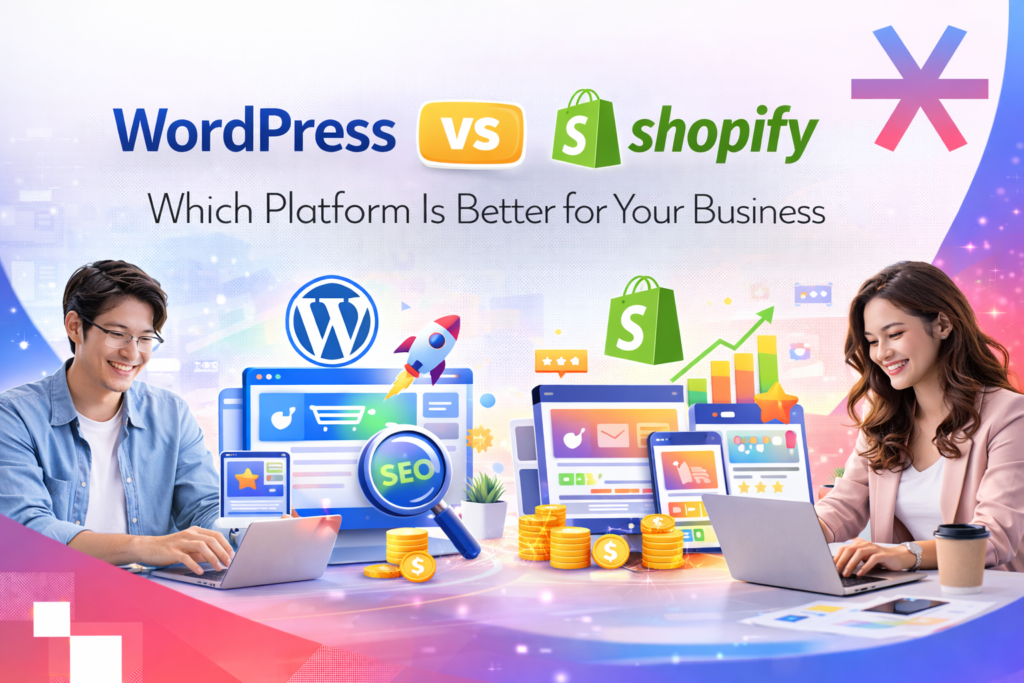
Choosing between WordPress and Shopify is one of the most important decisions when building an online presence.
Both platforms are powerful. Both dominate their markets. But they serve different types of businesses.
If you are building an ecommerce store, launching a content-driven brand, or scaling a growing business in Australia, this guide breaks down the real differences in features, pricing, flexibility, SEO, and long-term scalability.
What Is Shopify?
Shopify is an all-in-one ecommerce platform designed specifically for selling online.
It includes:
-
Hosting
-
Security
-
Payment integration
-
Product management
-
Built-in sales tools
-
App marketplace
-
Customer support
Everything is centralised inside one dashboard.
It is designed for businesses that want a streamlined, low-technical setup with built-in ecommerce functionality.
What Is WordPress?
WordPress.org is an open-source content management system (CMS).
It powers over 40% of all websites globally.
However, WordPress alone does not include ecommerce. To sell products, you must install WooCommerce or another ecommerce plugin.
With WordPress, you manage:
-
Hosting
-
Security
-
Plugins
-
Backups
-
Performance optimisation
This gives you maximum flexibility but also requires more technical oversight.
WordPress vs Shopify: Key Differences
1. Ease of Use
Shopify
Shopify is built for non-technical users.
You can:
-
Add products quickly
-
Manage orders easily
-
Install apps with one click
-
Accept payments immediately
The onboarding process is guided and beginner-friendly.
WordPress
WordPress has a learning curve.
You must:
-
Purchase hosting
-
Install WordPress
-
Configure plugins
-
Manage updates
-
Secure your site
It offers flexibility but requires more involvement.
Winner for ease of use: Shopify
2. Pricing Structure
Shopify Pricing
Shopify plans typically include:
-
Hosting
-
SSL certificate
-
Security
-
Ecommerce functionality
-
Basic SEO features
Plans range from entry-level options to enterprise tiers.
You pay one recurring fee.
WordPress Pricing
WordPress is free to install, but you must pay for:
-
Hosting
-
Premium themes
-
Paid plugins
-
Security tools
-
Developer support (if needed)
Costs can vary significantly depending on configuration.
While WordPress may appear cheaper initially, plugin and maintenance costs can accumulate.
Winner for transparent pricing: Shopify
3. Ecommerce Capabilities
Shopify
Shopify is built specifically for ecommerce.
Features include:
-
Unlimited products
-
Built-in abandoned cart recovery
-
Multi-channel selling
-
Inventory management
-
AI-assisted product tools
-
Payment gateway integration
Everything is native.
WordPress + WooCommerce
WooCommerce allows:
-
Unlimited products
-
Custom checkout design
-
Extensive payment gateway options
-
No forced transaction fees
However, functionality depends on plugins.
Shopify centralises ecommerce.
WordPress customises ecommerce.
Winner for built-in selling power: Shopify
4. SEO Capabilities
Shopify SEO
Shopify includes:
-
Automatic sitemap generation
-
Basic on-page optimisation tools
-
AI-generated meta suggestions
-
Clean site structure
-
Mobile-optimised themes
It handles technical fundamentals automatically.
WordPress SEO
WordPress provides deeper control.
With plugins like Yoast or Rank Math, you can:
-
Fully customise metadata
-
Optimise URL structures
-
Implement advanced schema
-
Manage technical SEO settings
-
Control site speed at a granular level
However, you must manage it yourself.
Winner for advanced SEO control: WordPress
Winner for beginner-friendly SEO: Shopify
5. Design and Customisation
Shopify
-
1,000+ themes
-
Professional ecommerce-focused templates
-
Limited full-code flexibility
-
Simple theme editor
Shopify is structured but somewhat controlled.
WordPress
-
14,000+ themes
-
60,000+ plugins
-
Full code access
-
Unlimited design flexibility
You can build almost anything.
However, this flexibility requires skill or developer support.
Winner for total creative control: WordPress
6. Security and Maintenance
Shopify
-
Hosting included
-
SSL included
-
Automatic updates
-
PCI compliance
-
Security managed by Shopify
Minimal technical responsibility.
WordPress
You must:
-
Update plugins
-
Manage security patches
-
Install security tools
-
Monitor vulnerabilities
Improper maintenance can create risk.
Winner for security simplicity: Shopify
7. Scalability
Shopify
Shopify is excellent for:
-
Dropshipping
-
Retail ecommerce
-
Direct-to-consumer brands
-
Multi-channel selling
Upgrading plans increases capacity without technical complexity.
WordPress
WordPress scales through:
-
Hosting upgrades
-
Custom development
-
Performance optimisation
-
Advanced server configuration
It offers deeper enterprise customisation.
Winner depends on business type
When to Choose Shopify
Choose Shopify if:
-
You are building an ecommerce-first business
-
You want minimal technical setup
-
You prefer predictable monthly costs
-
You need fast deployment
-
You want centralised management
Shopify is ideal for product-based businesses that prioritise ease and speed.
When to Choose WordPress
Choose WordPress if:
-
You are building a content-heavy website
-
SEO depth is a priority
-
You need full design flexibility
-
You want custom functionality
-
You have technical support available
WordPress is powerful for brands focused on authority content, blogs, or complex integrations.
WordPress vs Shopify: Final Verdict
There is no universal winner.
Shopify is better for:
-
Fast ecommerce setup
-
Simplicity
-
Built-in sales features
-
Managed security
WordPress is better for:
-
Custom development
-
Advanced SEO control
-
Content-first strategies
-
Full creative flexibility
Your decision should depend on:
-
Budget
-
Technical resources
-
Business model
-
Growth plans
Final Thoughts
In 2026, both WordPress and Shopify remain powerful platforms.
The real question is not which one is better in general.
It is which one aligns better with your business model, technical capacity, and growth strategy.
If you want a streamlined ecommerce system with built-in selling tools, Shopify offers speed and operational simplicity.
If you need advanced flexibility, content authority, and full control over structure, WordPress provides deeper customisation.
But choosing the platform is only the first step.
Long-term success depends on how well your website is built, optimised, maintained, and supported by the right marketing infrastructure.
For businesses in Australia looking to scale properly, that often includes:
-
Professional Web Design & Development to ensure your platform is structured for performance and user experience
-
Reliable Domain & Hosting solutions to maintain speed, uptime, and security
-
Ongoing Shopify Web Maintenance or Website Maintenance services to prevent technical issues and downtime
-
High-converting Landing Page Development to support campaigns and paid traffic
-
Scalable Google Ads, PPC, and Performance Marketing services to drive immediate, measurable growth
A platform alone does not generate revenue.
A properly built ecosystem does.
Whether you choose WordPress or Shopify, aligning your website with structured digital marketing, technical stability, and conversion-focused strategy is what ultimately drives sustainable business growth.