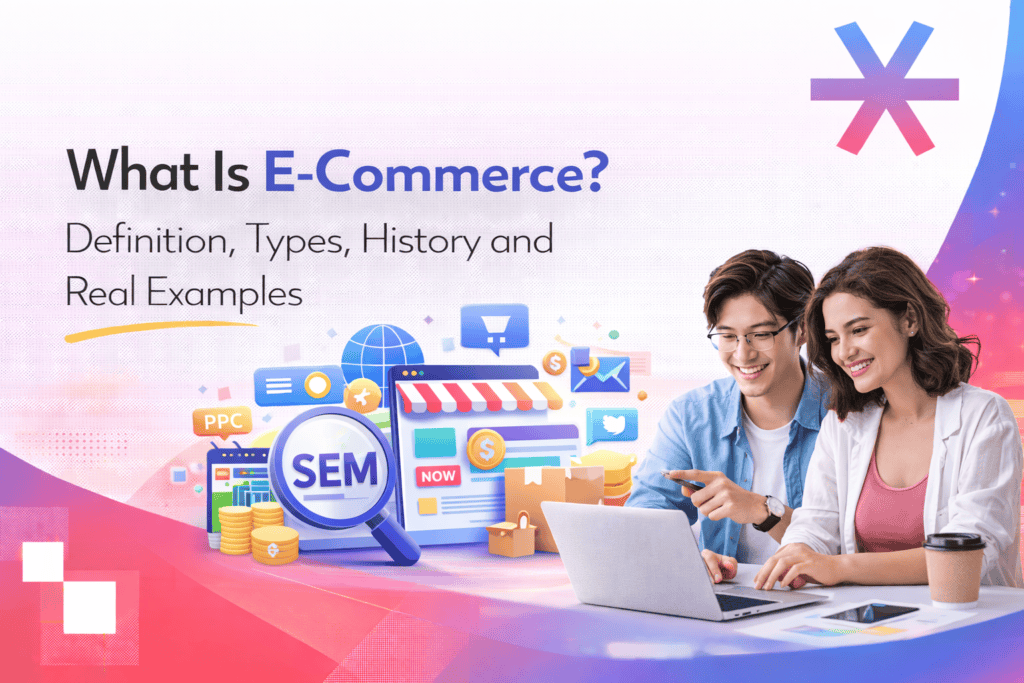
E-commerce, short for electronic commerce, is the process of buying and selling goods or services over the internet using digital devices such as computers, smartphones, and tablets.
From ordering groceries online to subscribing to software, booking flights, or purchasing through social media, e-commerce now powers a significant portion of global trade. What began as a niche digital alternative to physical retail has become a dominant business model across industries.
This guide explains what e-commerce is, how it works, its history, advantages and disadvantages, core business models, revenue structures, real-world examples, and how you can apply it in practice.
What Is E-Commerce and How Does It Work?
At its core, e-commerce is a digital transaction between a buyer and a seller. However, it relies on a large and often invisible infrastructure to function smoothly.
A typical e-commerce process includes:
- A business builds an online storefront through a website, marketplace, or app.
- Products or services are listed with pricing, descriptions, images, and specifications.
- Customers browse, search, filter, and compare options.
- The customer completes checkout using a secure payment gateway.
- The business processes the order, ships the product, or delivers a digital service.
- Post-purchase emails, support, and marketing continue the customer journey.
Behind the scenes, e-commerce requires:
- Hosting infrastructure
- Inventory and order management systems
- Payment processors
- Security protocols
- Marketing automation tools
- Analytics and customer data tracking
E-commerce can exist entirely online or operate alongside physical retail stores in an omnichannel model.
Understanding E-Commerce
E-commerce has lowered barriers to entry for businesses of all sizes. A local brand can now reach national or international customers without opening physical stores.
Large retailers integrate online stores into their existing brick-and-mortar operations. At the same time, individual entrepreneurs can sell directly through their own websites or through digital marketplaces.
In simple terms, e-commerce is the digital evolution of catalog shopping, but with real-time transactions, global reach, and data-driven optimisation.
History of E-Commerce
Although e-commerce feels modern, its roots go back decades.
- 1960s: Companies used Electronic Data Interchange systems to transfer documents digitally.
- 1994: The first secure online retail transaction took place.
- Late 1990s to early 2000s: Marketplaces like Amazon and Alibaba expanded rapidly.
- 2010s: Mobile commerce and social media shopping accelerated growth.
- 2020s: AI-driven personalisation and automation reshaped online retail.
Today, e-commerce represents a significant share of total retail sales in many economies and continues to grow as consumer habits shift online.
Advantages and Disadvantages of E-Commerce
Advantages
- Convenience: Online stores operate 24 hours a day, allowing customers to shop anytime.
- Wider selection: Businesses can offer broader product ranges than physical stores.
- Lower startup costs: No physical storefront reduces rent and maintenance expenses.
- Global reach: Companies can sell internationally without geographic limits.
- Data insights: Businesses collect valuable behavioural data to improve marketing and personalisation.
Disadvantages
- Limited physical interaction: Customers cannot touch or try products before purchase.
- Shipping delays: Unlike physical retail, instant gratification is limited.
- Technology dependence: Website downtime directly impacts revenue.
- Intense competition: Low entry barriers mean more competitors.
- Security risks: Handling customer data requires strong cybersecurity.
Types of E-Commerce
E-commerce operates under multiple transaction models:
- Business to Consumer (B2C): Businesses sell directly to individual customers. This is the most common model.
- Business to Business (B2B): Companies sell products or services to other businesses, often in bulk or through recurring contracts.
- Business to Government (B2G): Businesses provide goods or services to public sector organisations.
- Consumer to Consumer (C2C): Individuals sell to other individuals through marketplaces.
- Consumer to Business (C2B): Individuals provide services or products to businesses, such as freelancers.
- Consumer to Government (C2G): Digital transactions between individuals and government systems.
Each model has different operational complexity, pricing structures, and marketing strategies.
Types of E-Commerce Revenue Models
Beyond transaction types, revenue models define how an online business generates income.
- Dropshipping: The seller markets products while suppliers manage inventory and shipping.
- White Label: Products are manufactured by one company and rebranded by another.
- Private Label: Similar to white label but with greater control over product specifications.
- Wholesaling: Selling large quantities of products to retailers or businesses.
- Subscription: Customers pay recurring fees for regular delivery of products or access to services.
Choosing the right revenue model affects cost structure, scalability, and risk.
Example of E-Commerce in Action
Amazon began as an online bookstore in 1994 and expanded into a global marketplace offering millions of products. Its growth illustrates how e-commerce can scale across categories, services, and even cloud infrastructure.
While Amazon operates at enterprise scale, the same digital principles apply to small businesses launching focused online stores.
How Will You Use E-Commerce in Real Life?
You do not need a massive budget to enter e-commerce.
Many entrepreneurs start by:
- Identifying a specific customer pain point
- Validating demand
- Launching a focused product range
- Testing through paid ads or organic traffic
- Optimising based on customer data
Platforms like Shopify and WordPress reduce technical barriers, making it possible to test ideas with relatively low upfront investment.
The key is strategic positioning, strong branding, and continuous optimisation.
How to Start an E-Commerce Business
Starting an e-commerce business typically involves:
- Market research and audience validation
- Choosing a business model
- Registering your business and domain
- Selecting an e-commerce platform
- Designing a conversion-focused website
- Setting up payment gateways
- Implementing digital marketing strategies
Marketing is just as important as development. Without traffic and optimisation, even well-built stores struggle to grow.
What Is an E-Commerce Website?
An e-commerce website is a digital platform that allows users to browse, select, and purchase goods or services online. It includes product pages, cart systems, checkout functionality, payment processing, and order management.
Unlike informational websites, e-commerce platforms are built specifically to facilitate transactions.
What Is the Difference Between E-Commerce and E-Business?
E-commerce focuses specifically on buying and selling online.
E-business refers to the broader concept of running all aspects of a business digitally, including operations, marketing, supply chain, and customer service.
The Bottom Line
E-commerce has fundamentally transformed how businesses operate and how consumers shop. It has lowered entry barriers, expanded market reach, and created new opportunities for innovation.
However, launching an online store is only the beginning. Sustainable growth requires:
- Strong technical foundations
- Search visibility
- Paid traffic acquisition
- Conversion optimisation
- Reliable hosting and performance
- Ongoing maintenance
For Australian businesses looking to build or scale an e-commerce presence, MediaPlus Digital Australia supports growth through selected, performance-focused services including:
- Web design and development service to build scalable e-commerce platforms
- Search engine optimization (SEO) service to drive organic traffic
- AI SEO service to adapt to evolving search behaviour
- Google Ads service for measurable paid acquisition
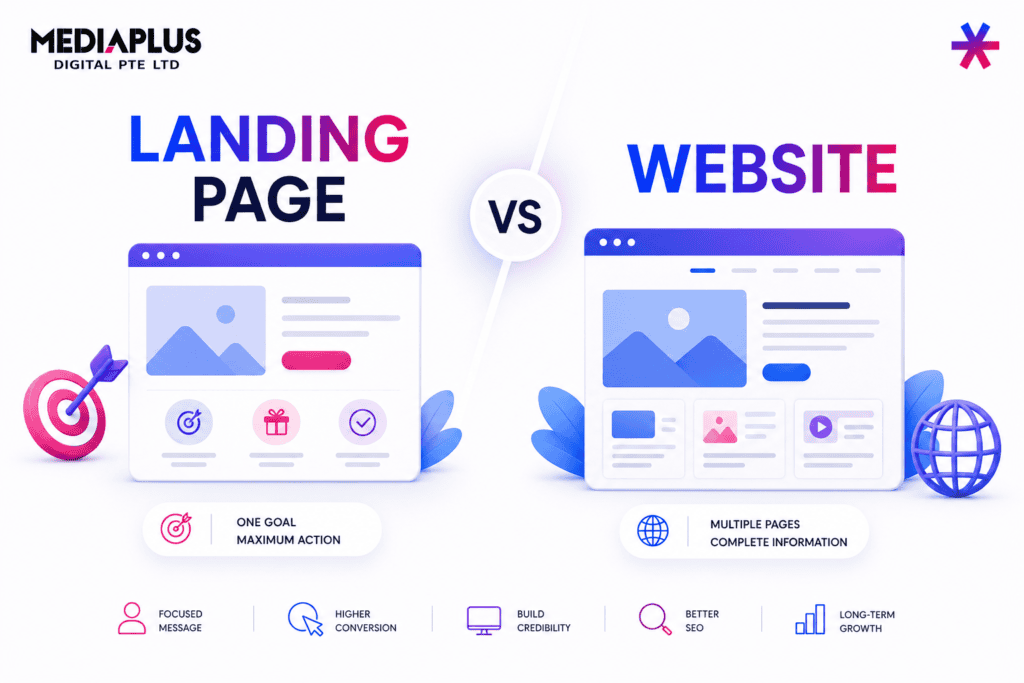
- Landing page development for campaign-driven conversions
- Reliable domain hosting and website maintenance for stability and performance
E-commerce is not just about selling online.
It is about building a structured digital growth system that compounds over time.