
Launching a website is a major milestone for any business. It is the moment your brand becomes publicly visible, searchable, and accessible to customers. But going live without a clear process can lead to broken pages, poor search visibility, slow performance, and missed opportunities.
That is why having a structured website go live checklist is essential.
This guide walks through every critical step Australian businesses should complete before, during, and after launching a website. It covers planning, design, SEO, performance, security, and post-launch optimisation so your site goes live confidently and performs from day one.
Step 1: Pre-Launch Planning and Website Strategy
Before touching design or content, clarify the purpose of the website.
Ask yourself:
-
Is the site designed to generate leads, sales, bookings, or brand awareness?
-
Who is the target audience?
-
What actions should users take on the site?
Next, define your site structure. Most business websites include:
-
Home
-
About
-
Services or Products
-
Contact
-
Blog or Resources
Planning user journeys early helps ensure visitors can move naturally from discovery to conversion.
Also confirm:
-
Budget for design, development, hosting, and ongoing tools
-
Platform choice such as WordPress, Shopify, or a custom build
-
Timeline and launch date
Step 2: Website Design and Branding Review
Your website design creates the first impression of your business. Before launch, confirm that branding is consistent and professional across all pages.
Check the following:
-
Logo is clear and correctly sized
-
Fonts are readable and consistent
-
Colours align with your brand identity
-
Layouts are consistent across all templates
-
Visual hierarchy guides users to key actions
Accessibility is also important. Ensure good colour contrast, readable font sizes, and image alt text for screen readers.
A well-polished design builds trust and credibility immediately.
Step 3: Content Review and SEO Setup
Content quality directly impacts both user experience and search engine visibility.
Before launch:
-
Proofread every page for spelling and grammar
-
Remove placeholder or duplicated text
-
Ensure each page has a clear purpose
For SEO readiness:
-
Write unique meta titles and descriptions for all key pages
-
Structure headings correctly using H1, H2, and H3 tags
-
Optimise images with descriptive alt text
-
Ensure URLs are clean and readable
-
Add internal links between related pages
SEO should not be treated as an afterthought. A website that launches without basic optimisation often struggles to gain visibility later.
Step 4: Link and Functionality Testing
Broken links and faulty forms create frustration and damage trust.
Test thoroughly:
-
Navigation menus and footer links
-
Internal links between pages
-
Buttons and calls to action
-
Contact forms and lead forms
-
External links opening correctly
Every interaction a user can take should be tested multiple times before launch.
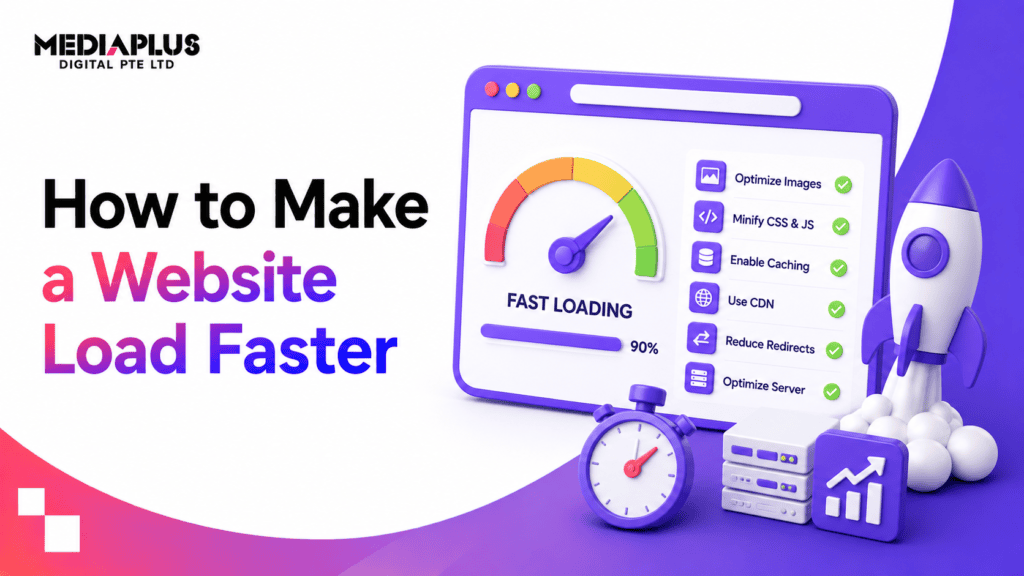
Step 5: Website Speed and Performance Optimisation
Website speed affects user satisfaction and Google rankings.
Before going live:
-
Test site speed using tools like Google PageSpeed Insights
-
Compress and resize images
-
Minify CSS and JavaScript files
-
Remove unnecessary plugins or scripts
-
Ensure hosting quality supports fast load times
Aim for pages to load in under three seconds on both desktop and mobile.
Step 6: Mobile Responsiveness Testing
Most Australians browse on mobile devices, so mobile testing is critical.
Check:
-
Design responsiveness on phones and tablets
-
Menu usability on small screens
-
Button spacing and readability
-
Forms and checkout flows on mobile
Google prioritises mobile-friendly websites, so this step directly impacts SEO.
Step 7: Analytics, Security, and Technical Setup
Every website should launch with proper tracking and security.
Ensure the following are in place:
-
Google Analytics for traffic and behaviour tracking
-
Google Search Console for indexing and performance insights
-
XML sitemap generated and ready for submission
-
SSL certificate installed so the site uses HTTPS
-
Automatic backups scheduled
-
Basic security protection enabled
Without tracking, it is impossible to measure performance or improve results after launch.
Step 8: User Testing and Feedback
Fresh eyes often catch issues you have missed.
Ask team members or trusted users to:
-
Navigate the site like a first-time visitor
-
Test forms and key actions
-
Provide feedback on clarity and usability
This step often reveals small but important improvements before public launch.
Step 9: Domain, Hosting, and Email Readiness
Your domain, hosting, and email infrastructure form the backbone of your online presence.
Confirm:
-
Domain is connected correctly
-
Hosting is reliable and located on Australian servers if possible
-
Professional email addresses are set up
-
DNS settings are correctly configured
Weak hosting or misconfigured domains can undermine even the best website design.
Step 10: Post-Launch Checklist and Monitoring
Launching the site is not the end of the process.
Immediately after launch:
-
Submit the XML sitemap in Google Search Console
-
Monitor indexing and crawl errors
-
Check analytics data is collecting correctly
-
Test live site performance
-
Monitor uptime and security alerts
In the weeks following launch:
-
Review user behaviour
-
Identify drop-off points
-
Plan content updates and SEO improvements
-
Schedule regular maintenance and backups
A successful website evolves continuously after launch.
Final Thoughts: Turning a Website Launch into Long-Term Growth
A website go live checklist is not about ticking boxes. It is about ensuring your website launches as a reliable, visible, and conversion-focused business asset.
Many businesses struggle not because their website looks bad, but because it launches without proper planning, SEO, or technical foundations.
If you want expert support beyond a checklist, MediaPlus Digital Australia provides professional website design and development services built for performance, scalability, and search visibility.
From strategic planning and UX design to SEO-ready development and post-launch optimisation, MediaPlus helps Australian businesses launch websites that do more than just go live. They grow.
If your next website launch needs to support real business outcomes, working with an experienced digital partner can make all the difference.